AI-Powered Planning and Design, for Better Project Delivery and Urban Developments
GET STARTED



PRODUCTS
Industries
Industries
© 2024 DigitalBlueFoam

Real estate development transforms land into residential, commercial, industrial, and mixed-use assets. It includes multiple development types, key planning steps, and essential software tools that improve efficiency and forecasting. With rising demands and sustainability needs, modern platforms help developers create smarter, profitable, and community focused urban environments.
Real estate development is the process of transforming raw and unused properties. This transformation can result in homes, commercial spaces, offices, and community centers.
As of 2025, global real estate is valued at over $393 trillion, with residential properties accounting for 73% of the market. This is being driven by rapid urbanization and more demanding and changing lifestyles.
Owing to this, the industry faces new challenges. Especially driven by rising construction costs, fluctuating macroeconomic factors and stricter sustainability regulations. This is coupled with the need for more smart, eco-friendly designs.
Developers, investors, and planners bear the responsibility of understanding the different types and strategies applicable in real estate development.
Through this article, real estate developers and urban planners can get a practical and concise overview of real estate development and its various facets.
The process of transforming land or existing properties into new real estate assets, be it commercial, residential, industrial, or mixed-use spaces is called Real Estate Development.
Akin to new property development, this process too involves several stages like planning, designing, financing, building, and marketing real estate projects, all managed by experienced real estate developers.
Owing to their experience and expertise, these professionals oversee every aspect of real estate property development, ensuring projects meet community needs, regulatory standards while maximizing investor and commercial value.
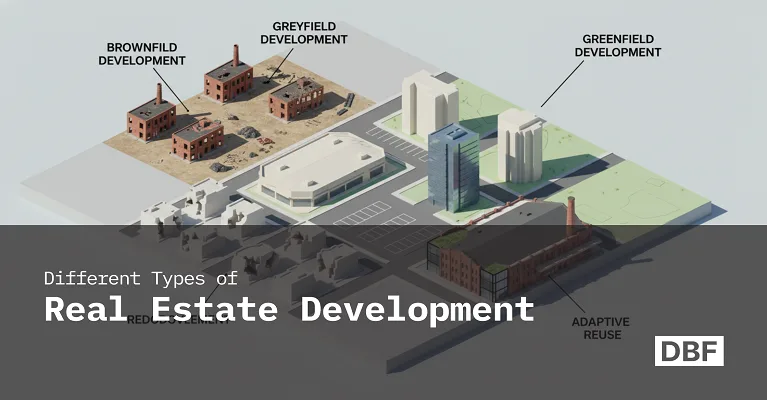
There are multiple different types of real estate development, all categorized based on the approach. This approach helps in transforming or repurposing the land or the buildings. The following are the key types of real estate development approaches.
Brownfield real estate development undertakes redeveloping sites that were earlier in use for commercial or industrial purposes. While the sites may be contaminated, this property development involves environmental remediation and safe conversion of land into productive real estate properties. Brownfield projects and developments often unlock new opportunities for commercial spaces and residential real estate development within city limits.
Greenfield development takes place on land that hasn’t been used for development earlier. This could be across farmlands or open fields, often giving real estate developers a blank page for their imagination. Greenfield real estate development is pivotal to meeting today’s growing infrastructure needs and offers flexible designs for large-scale property development.
Greyfield development works on underperforming, outdated commercial or retail properties that have gone down in value but are not polluted. In this type of real estate development, the focus is on repurposing existing real estate property developments. This is done by amplifying value through mixed-use projects or renovation, thereby supporting sustainable urban growth.
Infill real estate development entails having new buildings on underutilised or vacant urban spots. Infill development fills gaps in the already developed areas by using existing infrastructure and utilities to develop new residential, commercial, or mixed-use real estate developments. Infill real estate development is pivotal in minimizing urban sprawl and in promoting walkable neighbourhoods.
Redevelopment refers to the transformation of older buildings or neighbourhoods into new, high-value real estate developments. Real estate developers across the world use this approach to revitalize areas, improve property valuation, and support modern land requirements through office and commercial complexes or with residential real estate developments. Redevelopment often strengthens communities and brings together different innovative property development solutions.
Adaptive reuse is the process of repurposing old structures that could include factories or warehouses. This is done for newer functions like offices, or community centres. In Adaptive Reuse, the property developers have the onus of preserving the architectural heritage while having sustainable real estate development. Adaptive reuse projects often attract urban investors and architects who want to work on unique, historic spaces.
Now that we’ve understood the different types of real estate development, let us look at the conventional types. The conventional types of real estate development focuses on a specific category. Here’s a closer look at the main ones:
Residential real estate development, as the name suggests, is about making homes and communities for people to live in. This includes single-family houses, apartment blocks, or gated communities, projects that are designed for everyday living. These projects are undertaken across urban, suburban, and even rural settings, wherein these developments respond to shifts in population and their lifestyle requirements.
Commercial real estate development looks into spaces like office towers, shopping complexes, hotels, restaurants, and entertainment venues. These spaces are an integral part of the society as they support commerce and social connection. These are also pertinent in making commercial development a driving force for the local economy.
Industrial real estate projects bring manufacturing and economic development to the region. Developers plan and build facilities like warehouses, production plants, labs, and transport hubs. These spaces help organise supply chains and strengthen the region’s infrastructure, supporting jobs and economic growth.
Land development turns empty plots or unused land into usable real estate projects. In this case, developers handle everything from laying roads and installing utilities to reshaping zoning for new neighbourhoods or business districts. Land development is the starting point for new construction, marking the crucial groundwork that is to be laid before any detailed plans take shape.
Special purpose projects highlight properties that are built for very specific uses. This includes hospitals, schools, religious institutions, stadiums, or government buildings. These ‘special purpose’ projects meet unique community needs and do require extra planning to ensure regulatory, safety, and functional requirements are met.
Each real estate development type helps create a city’s character and boosts its overall vitality, meeting people’s needs and driving progress in visible, lasting ways.
While used interchangeably, real estate development and property development are two different aspects in the world of architecture and civil engineering. It is imperative to understand the differences to help have clarity on the roles of and the activities that are shaping our everyday environment.
Real estate development in simple terms encompasses ownership, buying, leasing, selling and investment in these areas.
Property development on the other hand refers to the process of designing, financing, building and managing a project.
Here’s a table highlighting the main differences between real estate and property development:
Real estate development is a complicated, multi-stage process that entails transforming land or properties into different valuable asset classes. The key details vary depending on the project’s size, location and type. Here are the key steps that are involved in real estate development:
Every real estate project starts with identifying and securing the right piece of land. Developers and other professionals take into account multiple facets including market demand, site conditions, due diligence, and other legal and environmental aspects to ensure the project’s viability and profitability.
Once the land is locked, detailed planning begins. This process brings in architects, planners, and other local authorities to come up with building designs, and in obtaining necessary permits and regulatory approvals. This phase is critical from a legal and community standards point of view.
Once the necessary approvals are in place, financing for the project is secured. This is done through loans, or through investors, or via partnerships. The financing covers construction, marketing and other costs.
Once the money is locked in, the construction begins. Here, the developers manage contractors, monitor progress, ensure quality standards are met whilst addressing any challenges that may arise during the physical building phase.
As the project nears completion, marketing efforts take precedence. Developers start promoting the property to potential buyers through various channels, thereby opening a stream of revenue.
After the project is completed, the management looks into property maintenance, tenant relations and other operational aspects to maximize the project’s value.
While each stage brings with it its own set of unique complexities, together, they transform a concept or an idea into a tangible development.
In a world where technology dominates every field, real estate developers have embraced it with the help of different software tools.
The following tools can help project managers and urban planners in managing projects efficiently and maximizing returns. Here are some top tools widely used in the industry today:
Northspure’s rating: 4.4
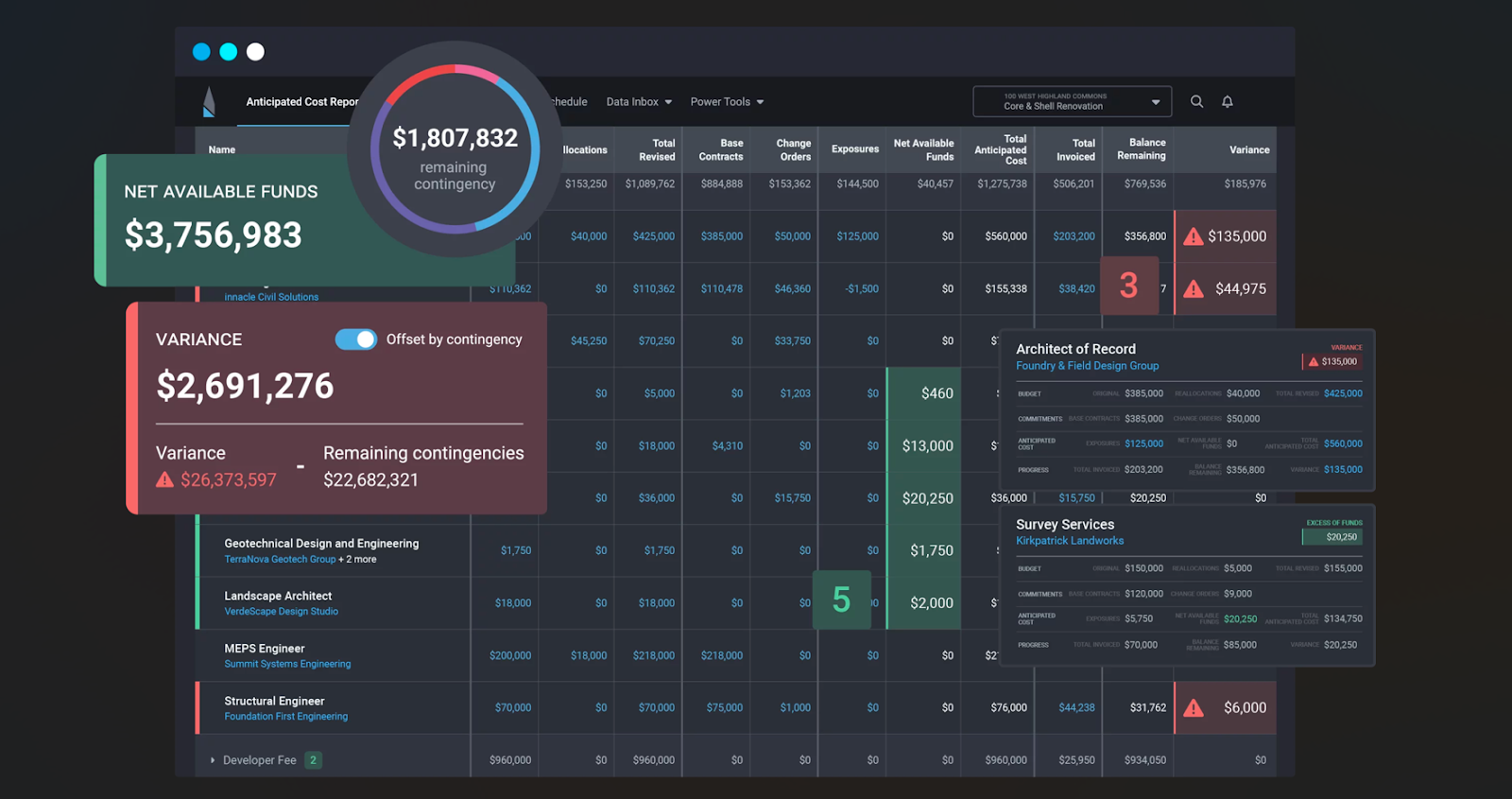
Northspyre is an end-to-end platform designed specifically for real estate developers. The solution is best used for automating budgeting, scheduling, and reporting to help project visibility and decision-making across the different aspects of the development lifecycle.
Pricing: The pricing plans for Northspyre can vary based on the size of the project.
Best For: Real estate developers and owners seeking enterprise-grade project automation.
Core Features:
Pros and Cons:
Procore’s rating: 4.6
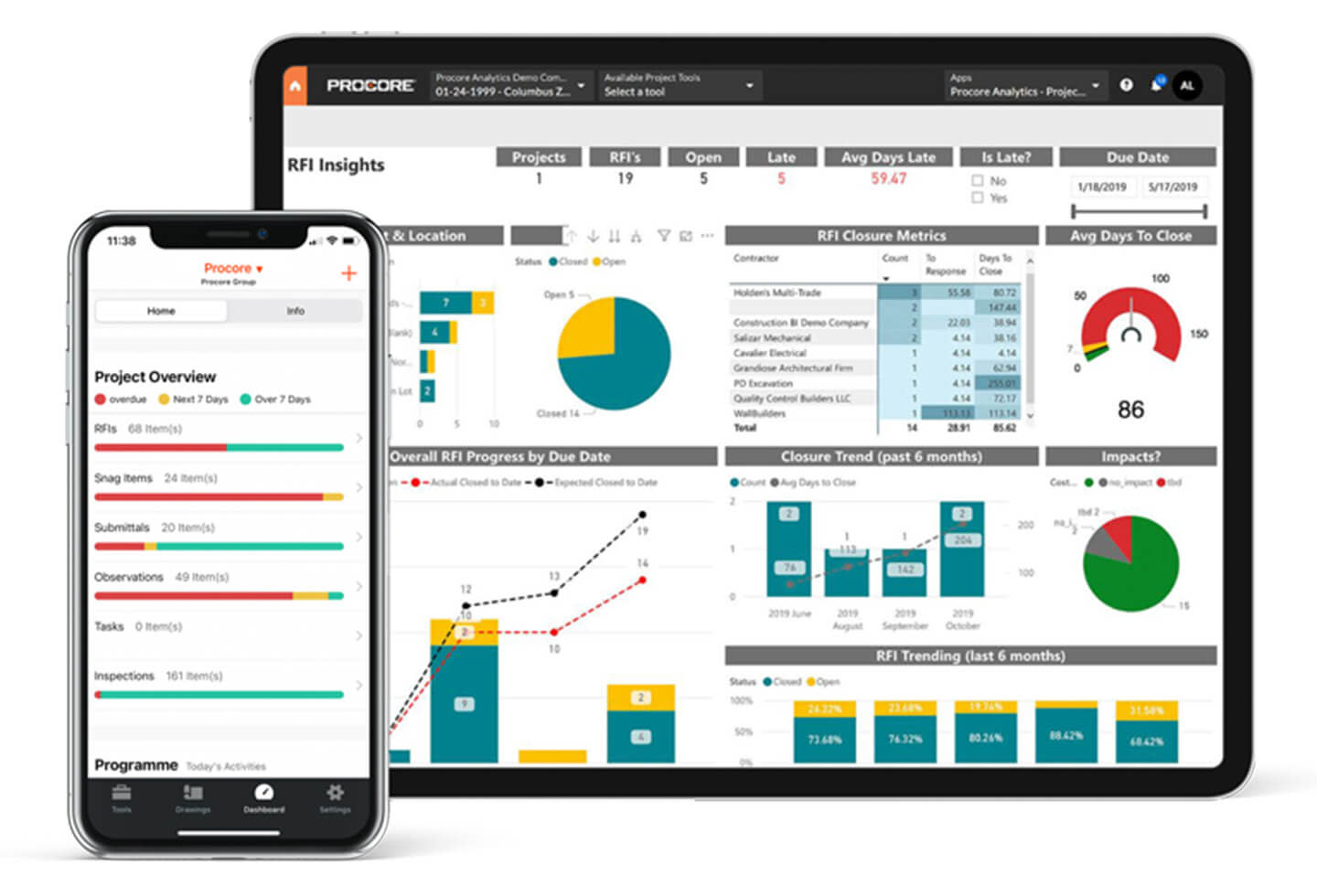
About Procore: Procore has built a reputation for being the go-to solution for construction management. This is done by providing a comprehensive set of tools for field collaboration, document control, and real-time communication on job sites.
Pricing: Pricing available on request
Best For: Construction firms and contractors needing robust project management tools.
Core Features:
Pros and cons:
Argus Developer’s rating: 4.8
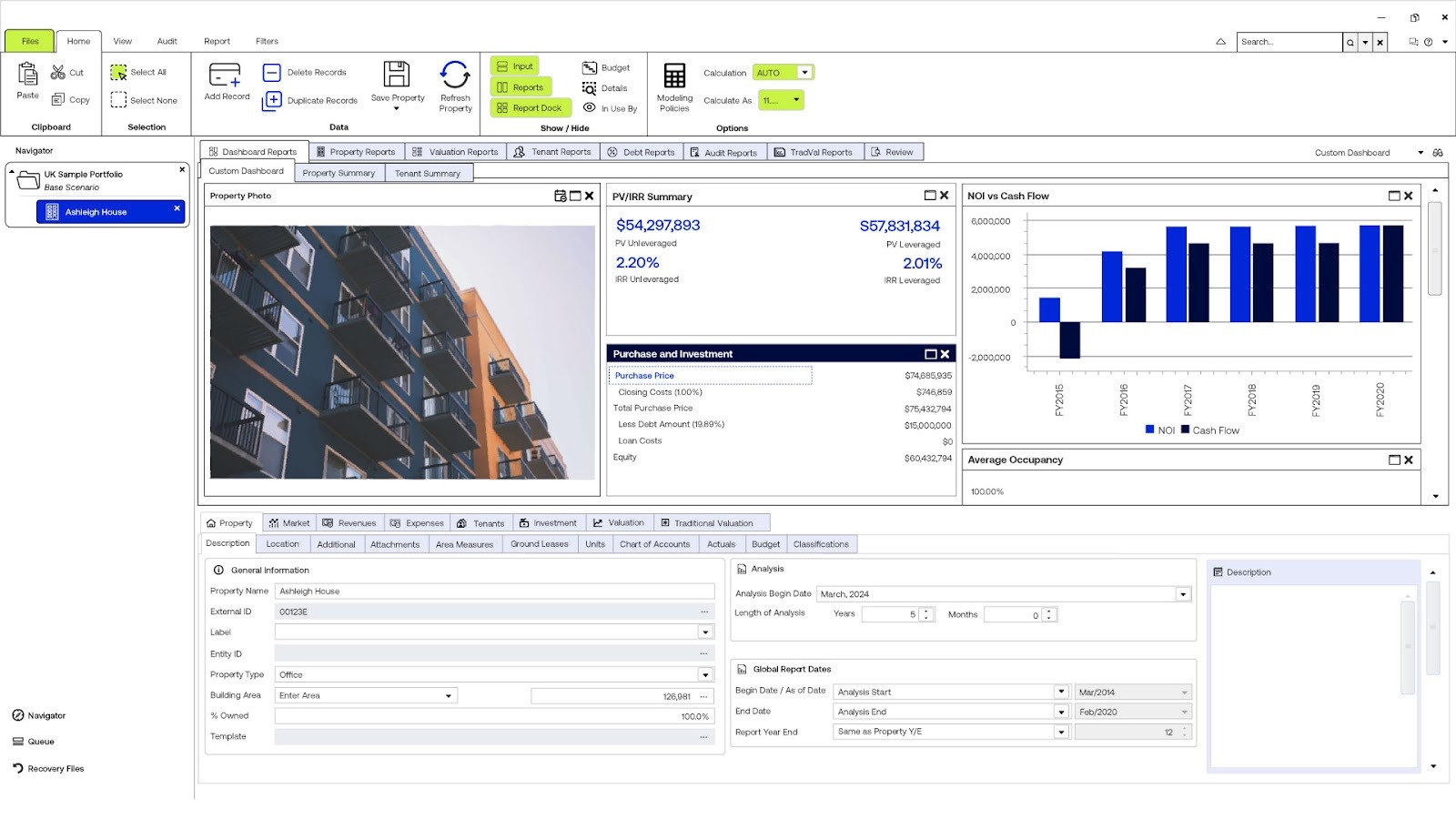
About Argus Developer: Argus Developer is a financial modelling tool that is used by commercial real estate investors and developers. The tool has features around detailed discounted cash flow (DCF) analysis, scenario planning, and investment forecasting.
Pricing: Pricing details are available upon request.
Best For: Analysts, commercial real estate investors, and financial firms who need advanced financial modeling.
Core Features:
Pros and cons:
Autodesk BIM 360 rating: 8.1/10
About Autodesk BIM 360: Autodesk BIM 360 has long been synonymous with architectural development. It comes with real-time 3D model collaboration, issue tracking, and integrated workflows. The solution is best used during preconstruction and design phases.
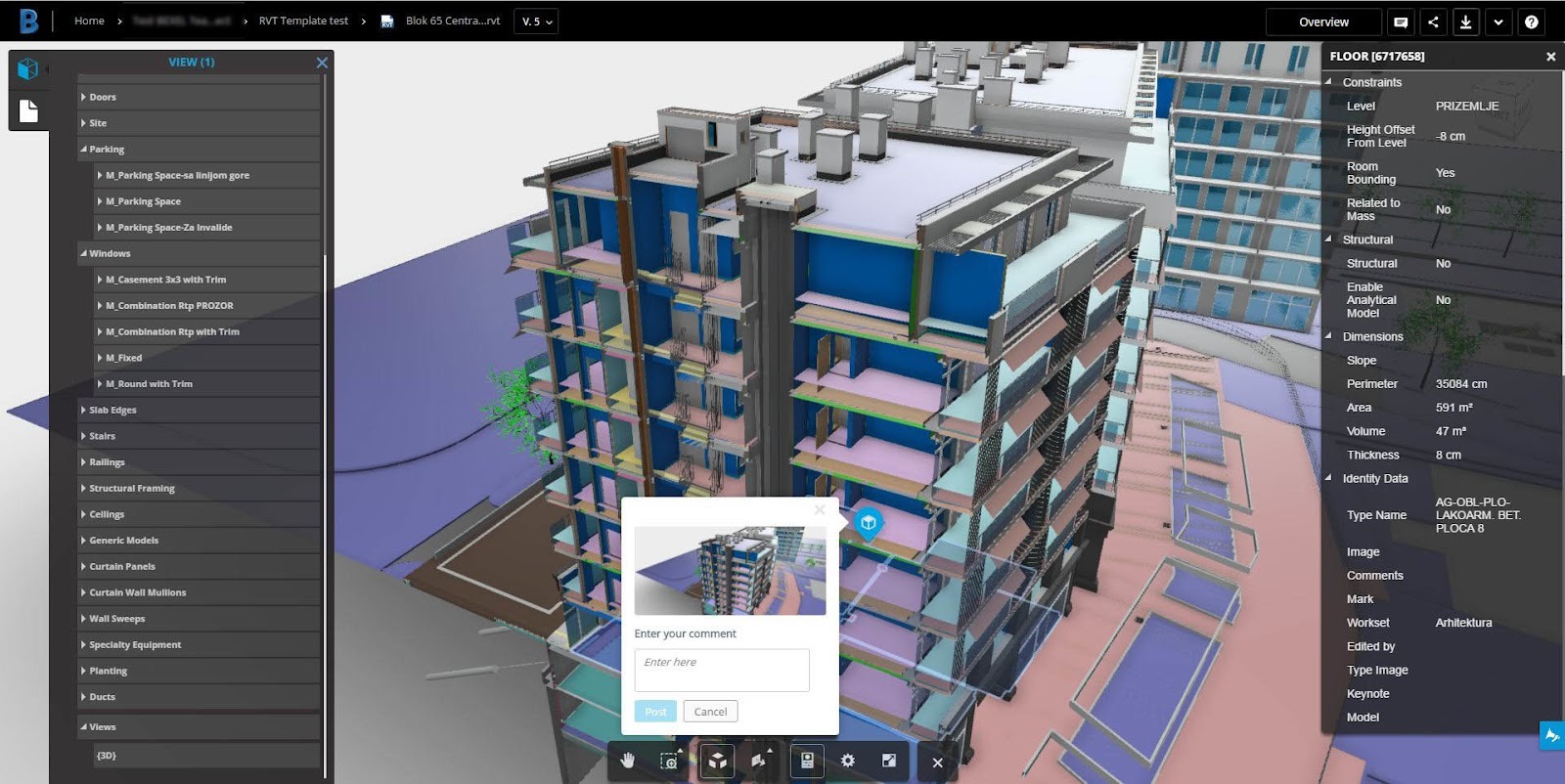
Pricing: Pricing available on request
Best For: Engineering, architectural, and construction companies wanting cloud-based collaboration management.
Core Features:
Pros and cons:
About Digital Blue Foam: Digital Blue Foam is an integrated platform that is tailored comprehensively for the entire real estate development lifecycle. DBF brings together the best of urban planning, financial forecasting, and market analytics into a user-friendly interface, making it an excellent choice for developers seeking a holistic solution. The solution with its AI-powered mechanisms makes it ideal for large-scale, large-impact projects.

Pricing: Pricing available on request
Best For: Municipal leaders, urban planners focussing on sustainable infrastructure or city planning with AI driven insights.
Core Features:
Pros and cons:
Each of these tools provide a specialized solution in different facets of the real estate development process. Right from financial analysis and deal management to designing to construction execution and client communication. Depending on the size of the project, focus, and workflow needs, a combination of these software solutions can help efficiency and outcomes.
Real estate development is more important and pertinent than ever before. Especially for its power to transform land into valuable assets that shape communities.
It encompasses various different types, each with a unique design. Each with different regulatory and market considerations. By understanding the different types, decision makers can yield the power to implement the right strategies and tools.
Modern technological solutions like Digital Blue Foam (DBF) empowers developers and planners with AI-driven analytics, real-time environmental insights, and large-scale infrastructural planning. All of this enables smarter and sustainable urban development. Decision makers and urban planners can also easily connect with the highly skilled product team of DBF for a personalized walkthrough or discuss tailored solutions by simply filling out a form.
Through such innovations and technologies, urban planners today have the unprecedented opportunity to balance social responsibility with profitability. One that can create everlasting value in today’s real estate landscape.
A real estate developer is a professional organisation that coordinates and manages the entire process of transforming land or properties into real estate assets. This includes the entire lifecycle from acquiring land, securing financing, obtaining permits, overseeing construction, and marketing or leasing the finished property.
Real estate is the foundation of where people live, work, and interact with each other. It also drives economic growth and shapes the physical environment around us. Moreover, real estate is also a key asset class for wealth building and financial security.
A real estate development model is a framework that dictates how the project is managed, right from the moment it is conceived to its execution. This includes financial planning, market analysis, risk management, and operational strategies, all tailored to maximize project feasibility and profitability.
Property Management involves all the day-to-day operations, maintenance, leasing, and administration of real estate properties. Property managers handle tenant relations, repairs, and ensure buildings remain safe, compliant, and profitable for owners.
The ‘7 Rule’ is a simplified method investors use to estimate the value of rental property. It suggests that a property's price should be roughly seven times its annual rental income to be a profitable investment. It's a quick way to gauge whether a property fits the investment criteria, but should be done with a detailed analysis.