AI-Powered Planning and Design, for Better Project Delivery and Urban Developments
GET STARTED



PRODUCTS
Industries
Industries
© 2024 DigitalBlueFoam

AI digital twins are transforming urban masterplanning by automating zoning checks, enabling real-time simulations, and streamlining stakeholder collaboration. This guide explains how they reduce review cycles from months to weeks, eliminate repetitive revisions, and improve decision clarity by helping planners deliver faster, more compliant, and data-driven masterplans.
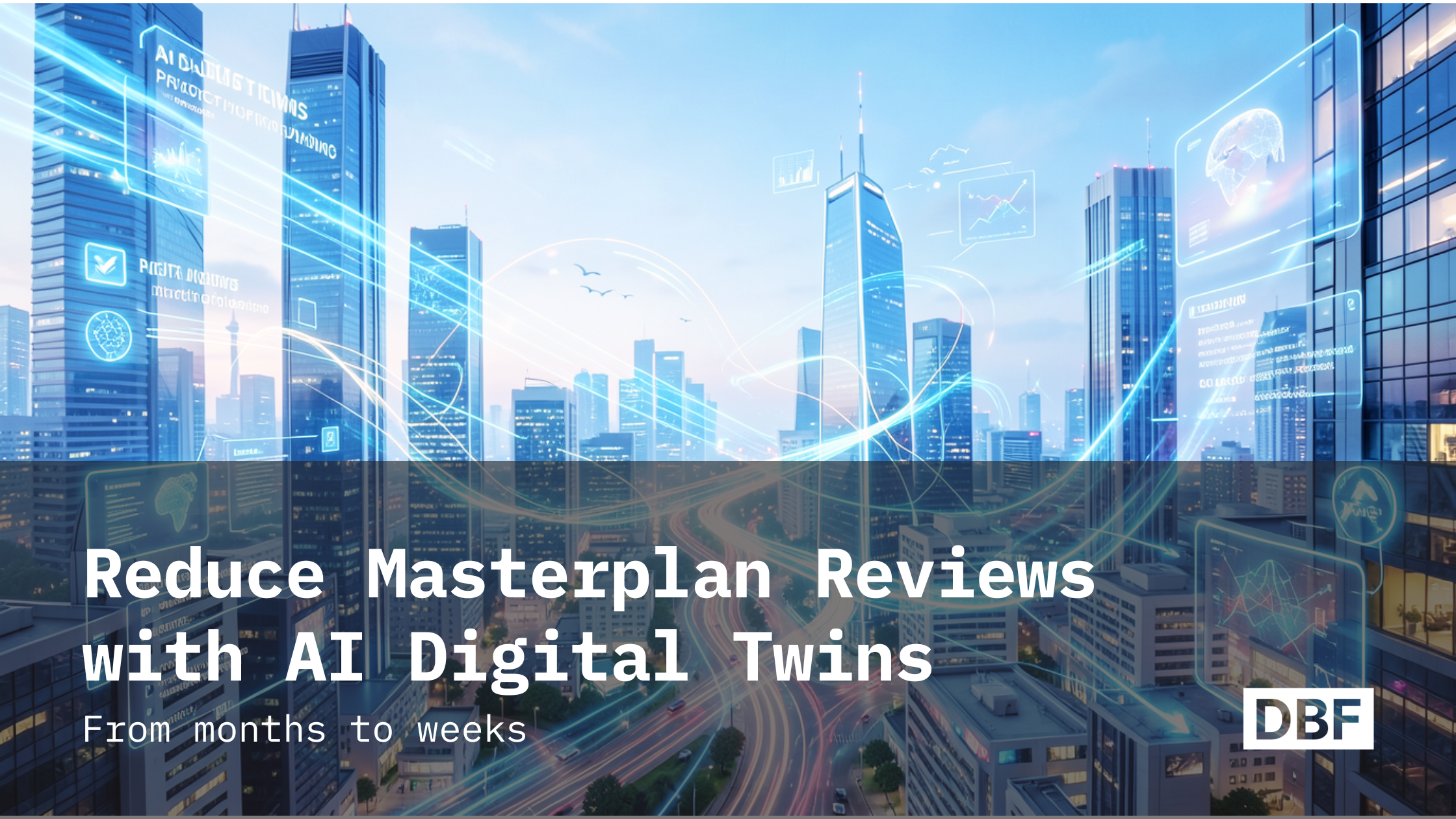
Masterplanning is a time-consuming process. Large-scale urban proposals move through multiple levels of fragmented reviews, revisions, and analysis before being approved. This often has an impact on the timelines, moving from months to years. At a time when the speed of development has a direct impact on financing, land value, and public outcomes, such delays are unsustainable.
AI Digital Twins are revolutionizing the way assessments, iterations, and approvals of master plans are carried out. This compresses assessments and approvals to weeks, without impairing any of the technical requirements, sustainability aspects, or alignment requirements.
This article explores why masterplan reviews are time-consuming, how AI digital twins are restructuring the process, and modern tools that aid in this process.
Urban masterplans are multi-disciplinary projects. Each version must meet the regulatory, environmental, mobility, infrastructure, and financial requirements. All of this across different agencies and design teams.
Architects and urban planners, planning departments, transport departments, and sustainability specialists function within their data world. Data flows between emails, printed reports, and presentation slides, making team review and analysis a tedious and error-susceptible process.
Floor space ratios, setback regulations, land use allocation, environmental buffers, and sustainability standards are all still tested manually or using separate software. Every change brings on another cycle of verification. This brings on even more delays and even more chances for inconsistencies to creep in.
Design alternatives are rarely used or are reviewed in tandem. Teams often review one design or scenario at a time, waiting for days or weeks to give out an update. Moreover, these considerations are carried out without taking into account density, mobility, energy demand, or environmental performance before moving to the next iteration.
Currently, non-technical stakeholders, like government officials, have difficulties in understanding spreadsheets. It, therefore, results in misunderstandings, hence slow processing of approvals.
This adds to the list of hindrances, making the entire process scattered, repetitive, and uncertain. AI Digital Twins optimize this process.
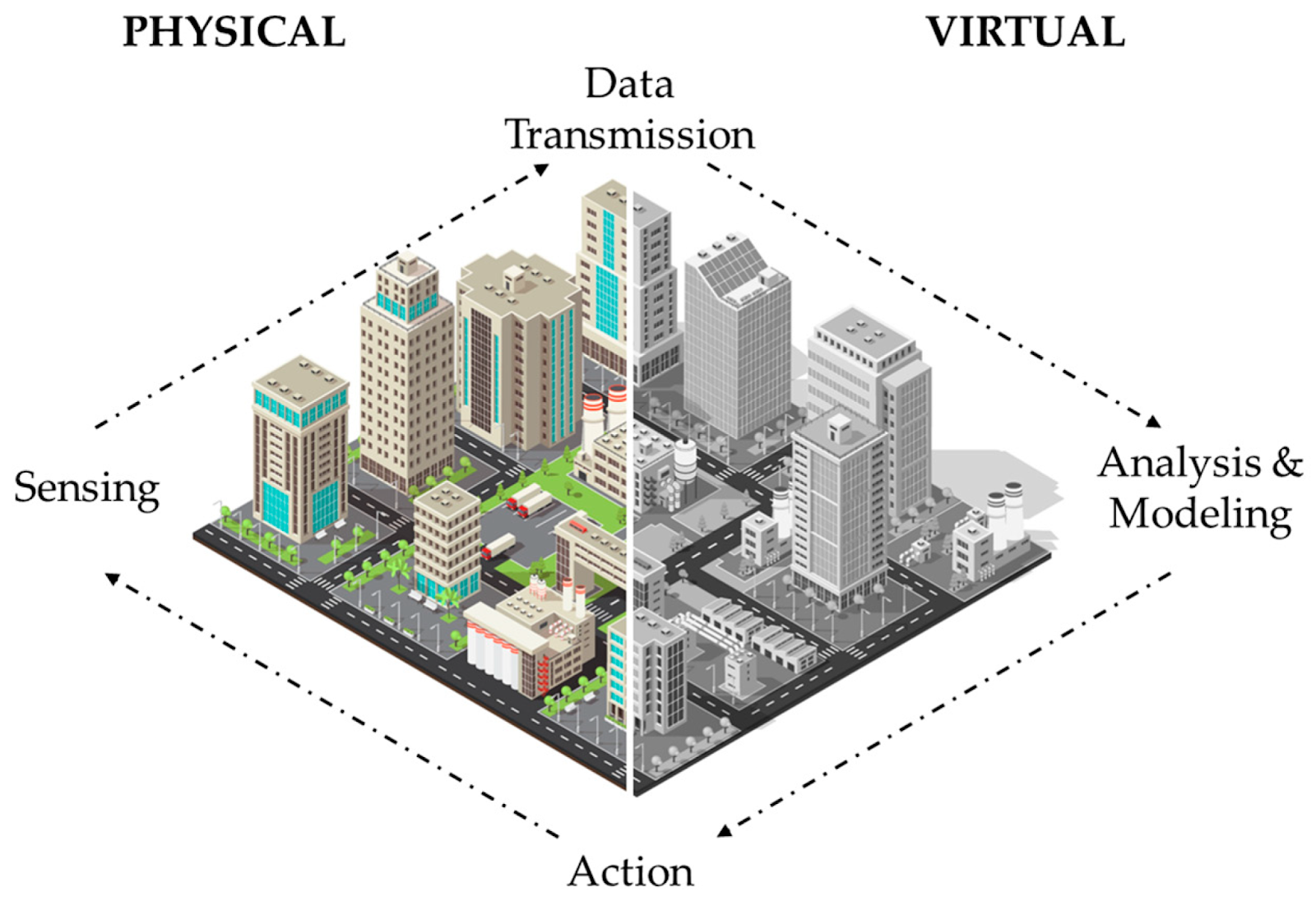
An AI digital twin is a virtual, data-integrated representation of a system that is constantly evolving. The integration of digital twins into a planning process can turn the traditional assessment of a masterplan into a real-time decision environment. Here’s how it helps reduce review cycles:
Digital twins assess all proposed floor plan arrangements for conformance with zoning requirements, density restrictions, land use, environmental setbacks, and local regulations. This way, there is no waiting for an audit report; rather, instant feedback is provided on design arrangements for possible conformance with all relevant requirements.
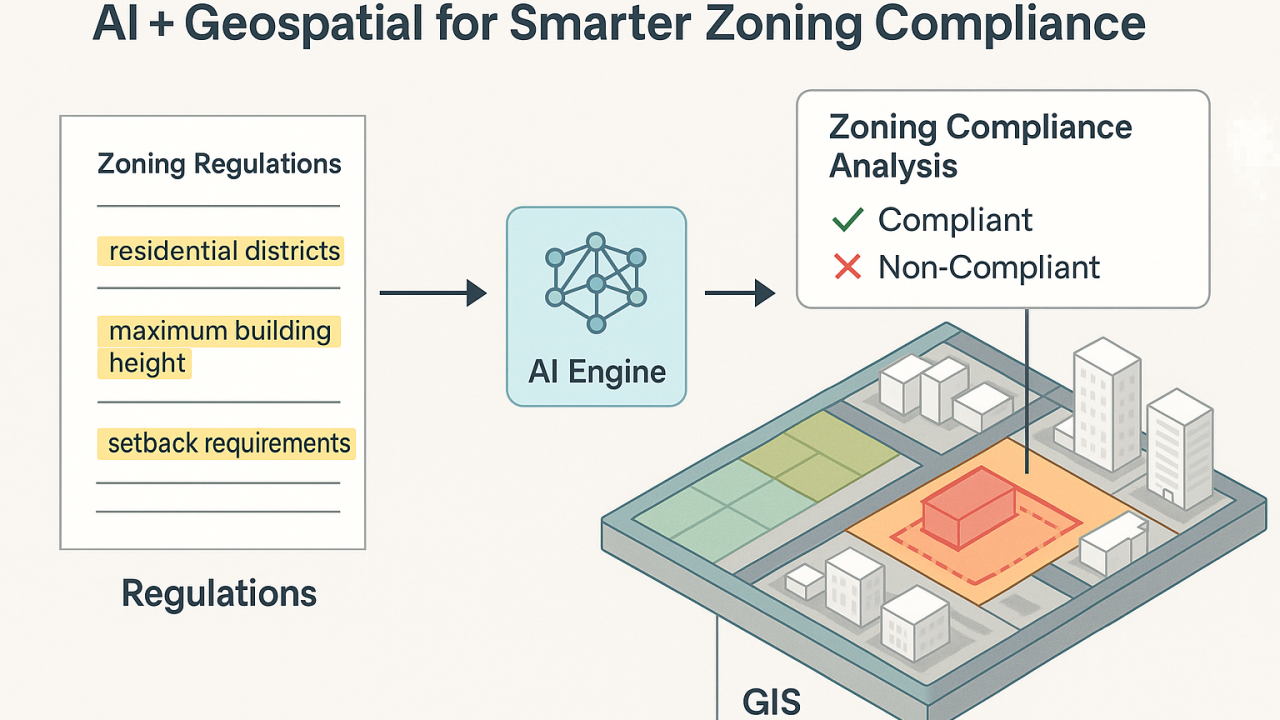
Digital twins can be used to test how masterplans might perform against various metrics. This might be done based on land use allocation, traffic, transportation, and connectivity, among other criteria. Through real-time processing, several solutions can be simultaneously tested.
Generative AI can produce different alternative urban layouts based on the requirements. Planners can define if they want to maximize energy efficiency, improve plot efficiency, or enhance climate resistance. Rather than manually integrating them into designs, AI-enhanced designs can help planners explore multiple configurations based on their requirements.
AI digital twins assist planners and stakeholders in comparisons of different scenarios. This could be with respect to infrastructure, transit zones, environment, and sustainability factors. AI-based solutions assist planners and stakeholders in simulating each scenario in real time, enabling them to grasp the minute details of their planning.
Cloud-based platforms help planning authorities, consultants, and developers to interact within the same platform. Comments, simulations, and design updates can be seen in a shared environment rather than through document exchanges.
With compliance being automated, AI-powered simulations can help support parallel inputs from multiple stakeholders, thereby reducing review cycles from months to weeks. What earlier required multiple submission rounds can now be resolved with a single coordinated workflow.
Conflicts can be identified early with AI-driven feedback loops. This reduces late-stage revisions and resubmissions.
Scenario dashboards, 3D models, and overlays help in ensuring that there is a better understanding to contribute to better design decisions.
AI digital twins also take into account climate, energy, and transport models in the planning process.
Digital Blue Foam (DBF) integrates the AI digital twin technology within masterplanning processes. It assists planners and stakeholders in a variety of ways, such as:
DBF compares master plans with various authorities and laws automatically. Aspects that are not compliant are flagged immediately, helping planners and stakeholders to correct the decisions during the design phase itself.
DBF provides a comparison of different planning strategies that allow planners to give an ideal perspective on decision-making. Every iterative situation helps planners in different performance indicators related to energy, transport, and environmental factors.
Real-time metrics with respect to daylight access, carbon impact, energy demand, and traffic patterns, among other things, could be shared with design teams. Feedback in this manner brings the design process full circle through continuous validation and approval.
DBF centralizes design, simulation, and review on a single platform. Stakeholders, architects, engineers, and developers work on a unified platform, helping them make synchronized decisions and reducing administrative frictions.
Smart city master plans are not straightforward. The interaction between land use, energy, mobility, and infrastructure needs to be taken into consideration. AI digital twins help in the evaluation of these systems together, helping to make faster and data-backed decisions.
Projects situated around the high-density transit areas have to deal with a host of ancillary factors. The density of population, land accessibility, and movement of pedestrians are just a couple of factors to be kept in mind. Digital twins enable the simulation of alternatives to overcome any hurdles of regulations.
Brownfield and redevelopment sites need to pay extra attention to regulatory scrutiny. Digital twins aid planners in gaining visibility on the early effects and also assist in ensuring compliance.
AI digital twins take into account flooding, heat exposure, and energy performance. All this while increasing transparency, making the process more sustainable.
Urban masterplanning can no longer afford slow, fragmented review cycles. As project timelines tighten and complexity increases, planners and authorities need tools that deliver speed without sacrificing technical rigor or regulatory confidence.
AI-powered digital twins make this shift possible by automating compliance checks, enabling real-time scenario testing, and bringing all stakeholders into a unified, data-driven environment. The result is a review process that moves from months to weeks while improving transparency, coordination, and performance outcomes.
Digital Blue Foam (DBF) operationalizes this transformation by embedding AI-driven validation, simulation, and collaboration into a single masterplanning workflow. With DBF, teams can iterate faster, reduce approval friction, and deliver resilient, future-ready urban plans—without compromising on quality, sustainability, or compliance.
AI digital twins automate multiple processes while running real-time simulations and fostering stakeholder collaboration. All of this eliminates manual audits, thereby reducing project approval timelines significantly.
Digital twins eliminate delays caused by manual processes, compliance validation, single-scenario analysis, repetitive feedback loops, and audits.
DBF helps with zoning validation, scenario testing, performance analysis, and cloud-based collaboration. The solution helps planners and designers focus on masterplanning workflows, helping improve quality.
The potential of AI digital twins is best harnessed with large-scale developments, transit projects, urban redevelopment, and climate-focused planning initiatives. The solution helps these projects with technical assurance and efficiency planning.