
AI-Powered Planning and Design, for Better Project Delivery and Urban Developments
GET STARTED



PRODUCTS
Industries
Industries
© 2024 DigitalBlueFoam

AI-powered transport hub planning: enhance multimodal connectivity, enable transit-oriented development, optimize passenger flows, and build resilient networks.









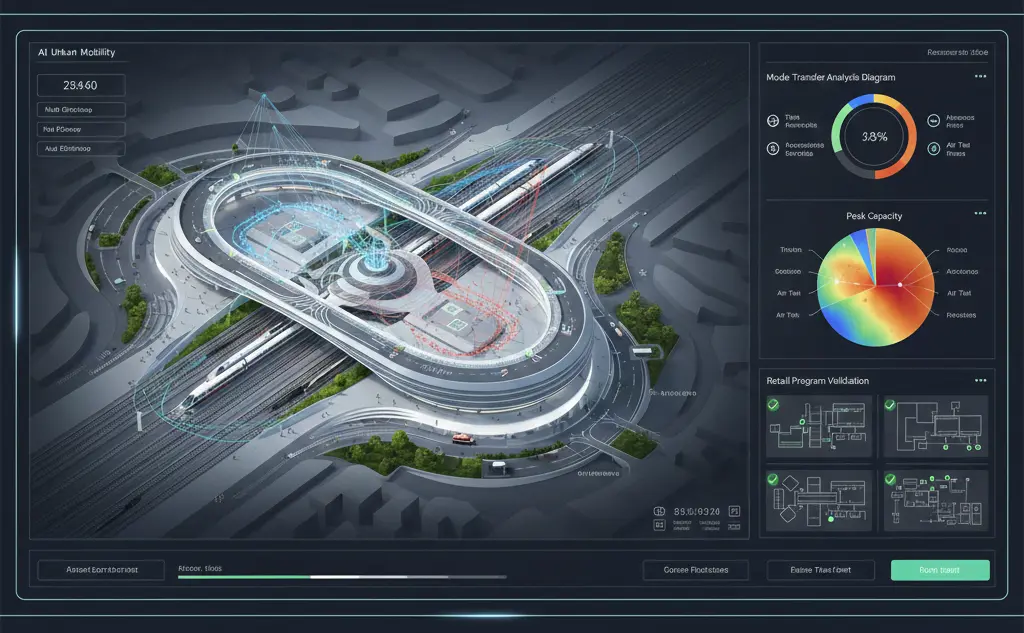
Transport hubs, combining rail, bus, metro, cycling, and pedestrian flows in a single interchange, are among the most operationally demanding building types. Leaders must validate passenger flow, mode transfer efficiency, capacity, retail programming, and wayfinding scenarios before committing to any single design direction. DBF's AI-powered feasibility platform generates multiple transport hub layout scenarios, tests flow and capacity KPIs, and validates spatial programs, reducing design iteration cycles and improving stakeholder confidence.

The failure modes of a poorly planned transport hub are severe, congestion, missed connections, safety risks, and poor passenger experience. DBF enables Planning Leads to simulate multiple interchange configurations and stress-test passenger flow assumptions before BIM modeling begins. The result is a more confident design brief, validated infrastructure sizing, and fewer late-stage changes.

Define transport modes, passenger volumes, and peak demand scenarios
Import site constraints and surrounding urban network data
Generate multiple interchange layout scenarios with AI layout tools
Validate passenger flow, transfer efficiency, and capacity KPIs
Test retail and amenity programming against footfall projections
Export validated layouts and reports for authority and stakeholder review
.webp)



.png)
.png)
.png)
.png)

As cities invest in decarbonizing transport and increasing rail and active travel mode shares, transport hub capacity and quality will be critical infrastructure priorities. DBF enables faster, smarter feasibility validation for the complex transport interchanges that underpin sustainable urban mobility systems.
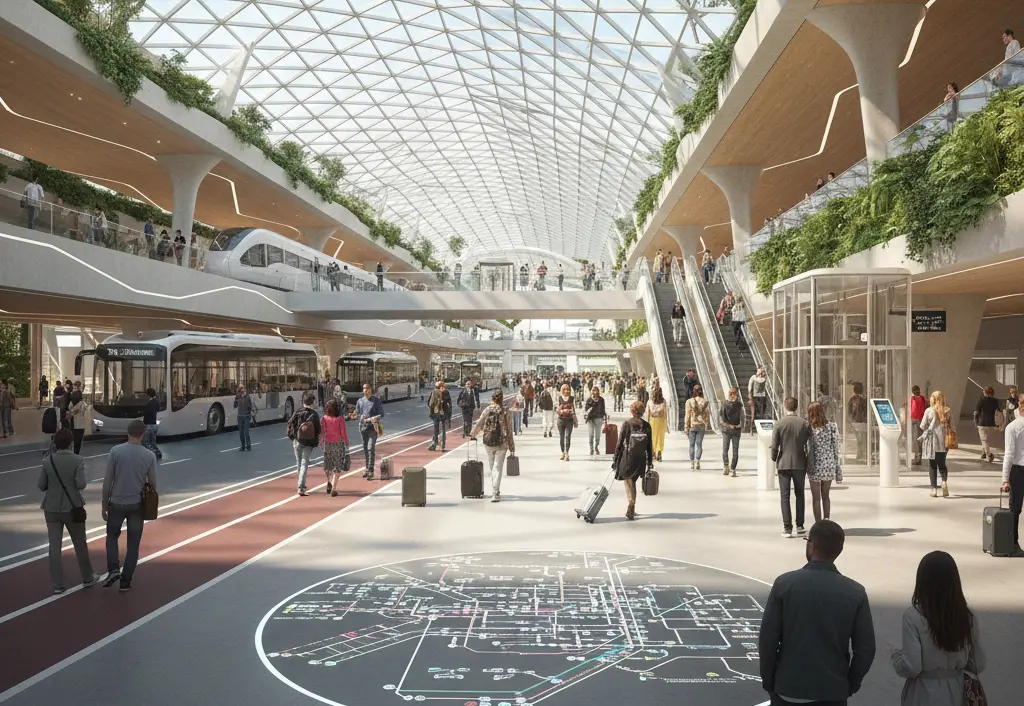
Software that generates and validates interchange layouts, passenger flow scenarios, and capacity configurations for multimodal transport facilities.
Yes. DBF simulates peak demand, identifies circulation bottlenecks, and tests multiple layout configurations to find optimal flow solutions.
DBF imports GIS and mobility network data to validate site accessibility, catchment analysis, and intermodal connection efficiency.
Yes. DBF validates mixed-use programs, integrating retail, F&B, and amenity footfall alongside transit passenger flow requirements.
In a short demo, you’ll generate options, compare scenarios, and walk through KPI reporting for your facility or masterplan context.
GET STARTEDGET STARTED