AI-Powered Planning and Design, for Better Project Delivery and Urban Developments
GET STARTED



PRODUCTS
Industries
Industries
© 2024 DigitalBlueFoam

Building orientation to sun and wind is a core passive design strategy that shapes thermal comfort, daylight quality, ventilation, and energy performance. By aligning buildings with solar paths and prevailing winds, architects reduce energy demand, improve occupant health, and meet sustainability and net-zero goals cost-effectively.
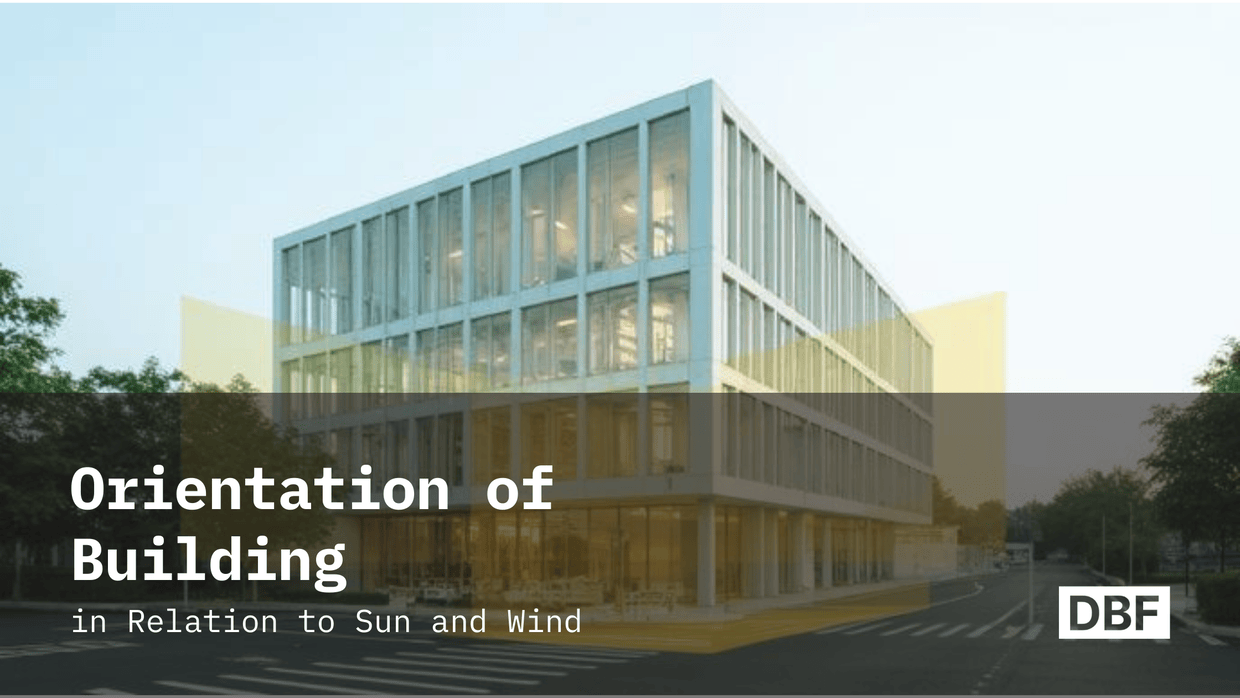
Building orientation is one of the most powerful and understated decisions one can take in architecture.
The way a construction responds to wind patterns and the sun’s direction dictate how the structure will have thermal comfort, light quality and indoor air health.
Way before artificial and electrical cooling and heating, traditional buildings worldwide were designed with climatic and natural orientation principles in mind.
Today, with sustainability mandates and regulations, wind and sun’s orientation in architecture is no longer just a design choice, but a performance imperative.
This blog aims to shed light on what building orientation really means, why it matters, and the principles that guide it. It will also explain how architects and urban planners can achieve optimal orientation that harnesses the power of the sun and wind.
In simple words, orientation refers to how a building is positioned with respect to or relative to the sun’s movement, wind direction, the topography and the surrounding environment. It defines how heat, light and air can interact with the building throughout the day and across seasons.
At a functional level, orientation has an impact on:
From a sustainability perspective, a building’s orientation forms the base of passive design. Design strategies that reduce the dependence on artificial heating, cooling, and lighting (such as placing windows for natural airflow and sunlight).
A building that has its orientation done appropriately can lower energy demand by 20 to 40%, improve living comfort, and reduce long-term costs without the addition of mechanical complexities.
For architects and planners, knowing how the sun moves is crucial for good building orientation. Daily and seasonal sun angles affect the heat and light a building receives. Sun patterns also determine:
Light and radiation that enter a building increase the indoor temperature. In regions with colder climates, this is very beneficial in winter. However, in more tropical regions, this could lead to overheating and higher cooling loads. Appropriate orientation can balance heat gain and shield through strategic positioning.
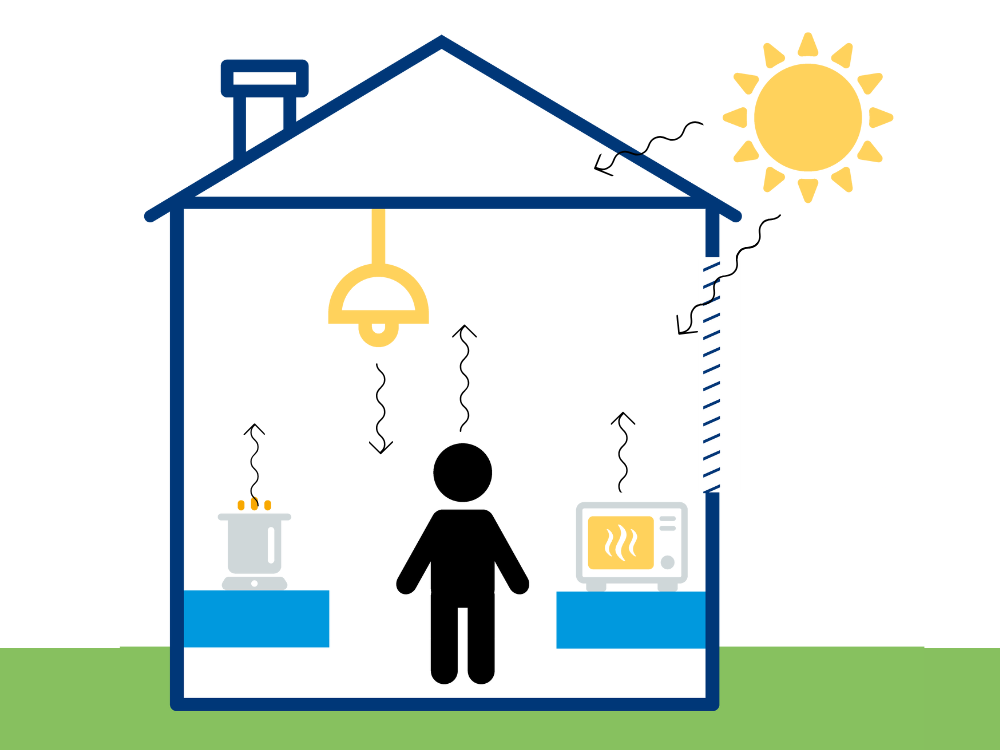
Natural light has a proportional impact on health, well-being and productivity. Its impact on the circadian rhythm has been well documented, too. Commercial buildings that have their orientation to maximise diffused daylight while minimising glare reduce the dependence on artificial lighting by 60%.
Buildings must employ smart sun orientation that adapts to seasonal behaviors. For example, buildings can have high-angle sun shading during summers and opening up low-angle sun during winters for passive heating. This is carried out using fins, overhangs, louvres and defining the depth of the façade.

Just like the sun has its impact on heating and lighting of a building, wind orientation defines how air moves around and through a building. It also impacts:
Architects and planners can align building openings with the wind direction to allow fresh air to flow through the interiors. This can reduce the need for mechanical cooling, reducing loads by 30 to 50% depending on the climatic conditions.
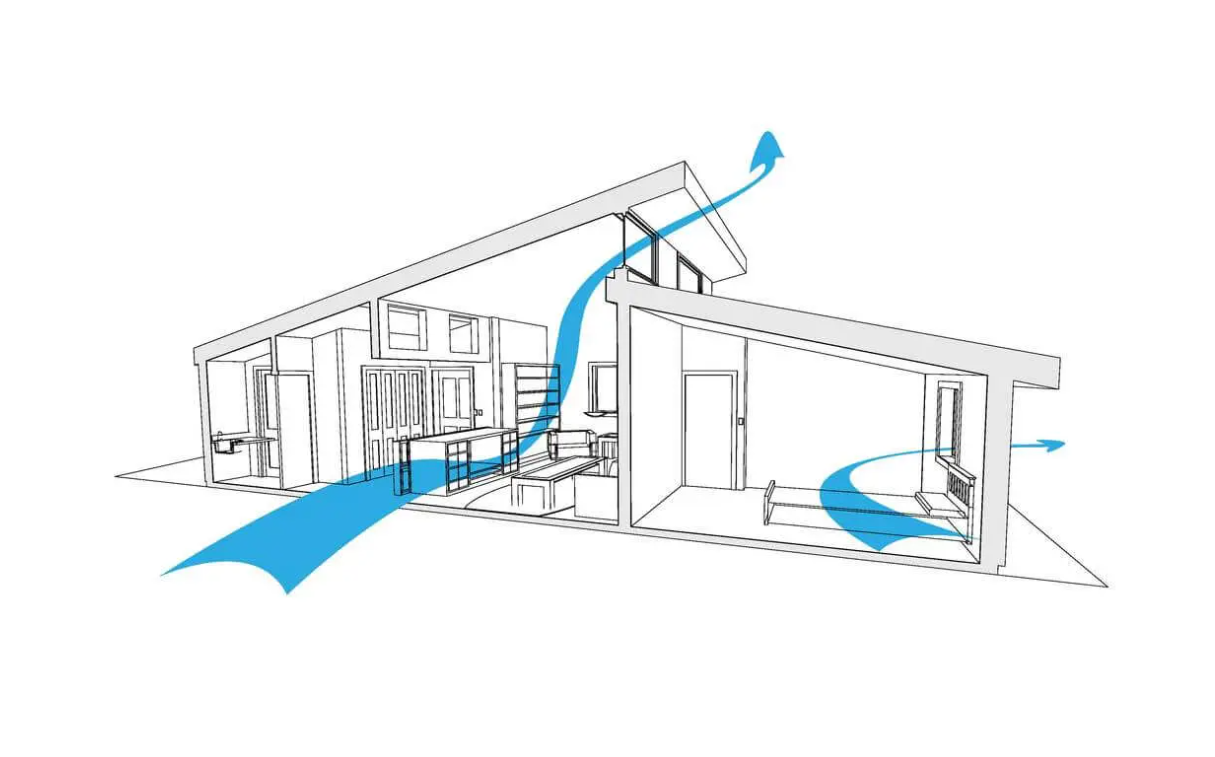
In tropical, hot, and humid climates, ventilation is necessary to get rid of the heat that is trapped. Architecture that uses wind direction strategically can ensure warm air is expelled while cooler air is drawn inside.
Wind speeds and their turbulence can impact multiple aspects like pedestrian comfort, dust and pollution movement, noise transmission, among others. A building that is oriented well controls the access of wind without obstructing it.
Building design is never arbitrary. It is defined by numerous contextual and environmental factors, all working in tandem. Here are a few of the principles that architects and designers keep in mind:
The angles of the sun and, as a result, solar energy dramatically differ between temperate, equatorial and polar zones. A building orientation in one region will behave very differently in a different geographic location.
Every location has wind patterns that change based on the seasons. Planners and architects must ensure that the buildings are aligned to harness the power of wind. This includes directing the cooling winds during summer and shielding against cold winds during winter.
The topography, neighboring buildings, existing roads and water bodies around the site have an influence on the airflow and shadow patterns.
Each building has a predefined purpose. For instance, residential buildings prioritize occupants’ comfort and daylight. Commercial buildings must take care of the sun’s glare and thermal stability. Institutional and healthcare buildings need to have specific environmental control.
Buildings that are aiming to be net-zero or low-energy buildings have a heavy reliance on passive measures like orientation before active systems can be implemented.
Here are some best practices to help you optimize passive solar effects in building design:
This implies that the length of the home should take a west-east orientation. Again, the smaller width should be on the northern side to optimize solar gains in colder months. If you are designing a home for a client in the southern hemisphere, the length should still be on an east-west consideration for maximum solar energy gains. However, the smaller width should face the south. In the equatorial region where the sun is available most of the days of the year, the orientation might not target getting direct radiation but a cool breeze to cool the house on hot days. An interactive façade would come in handy in this case to make the house design more appealing.
To be able to optimize the benefits of building orientation, you need to differentiate between the true north and magnetic north. The sun follows the true north and this is what you should use when designing a building to cut down energy-related bills. Ensure that the short axis of the house orients towards the true north or south to capture maximum sun light and heat
● Ensure the House Floor Plan is Oriented Towards the Sun
Can you imagine getting the sunlight right in your house in winter? It is possible with the right building orientation. By designing houses with regularly used rooms, such as the living room and kitchen on the south (for houses in the northern hemisphere) and north (for houses in the southern hemisphere), it will be possible to receive sun most times of the year. You should also design decks and patios on the side where they will get maximum sunlight. Then, those that are not used regularly, such as the bedroom and library, can be positioned away to act as buffers during the cold months.
There is nothing as enjoyable as being able to enjoy passive heating in the house. Whether it is in the form of light or heating, a house becomes more comfortable, and energy-related bills will go down. If you are designing a building with large patios and verandahs, orient them in a way that the user will be able to enjoy every minute the sun is up. Sure it might not be all the months of the year, but the satisfaction from your building when the sun finally shines above the sky will be unforgettable.
You need to appreciate that the north-south orientation can be exaggerated if the site is located in a hilly or mountainous region. For example, what if the site is sloping towards the west as opposed to the common north-south direction? What if the plot is positioned at the mountain peak where there are strong winds?
One of the solutions to the above two scenarios is working on a building design that allows for about 30% from the east-west orientation. This means that during the cool and warm months, you will still get sunlight and heat because of the angle.
The wind is another crucial environmental factor that you must include in the equation of building design and orientation. You can check for solar and wind data to determine the predominant and general wind direction so that the house can enjoy cool breezes to reduce the cooling needs on hot days. When there are strong winds, the house design should be strong enough to protect both the structure and occupants.
Other important considerations related to the orientation of building in relation to sun and wind are drainage, scenic views, street appeal, and drainage considerations. Make sure to also understand your client well because there are some who have special attachments to regions, mountains, or religious places and would do anything to stick to them and bypass all other factors.
Planners and architects put in a lot of thought to achieve the right orientation of the building in relation to the sun and wind. This is done by analysing the site and taking intelligent design decisions. Here is a practical guide for the same.
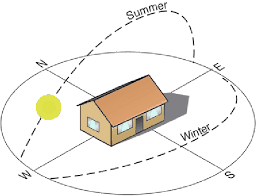
The sun path diagrams need to be studied in detail. They can help with important information like the solar angle during different times of the year, the number of hours of direct sunlight that will fall on each façade, and the shading requirements by season.
For most climates, the north-south orientation is optimal for residential and institutional buildings. This facilitates controlled daylight and reduces east-west exposure of the sun. Architects also take into account how east-facing sides get strong morning sun while west-facing ones receive intense afternoon heat, which is hardest to shade.
With the help of meteorological data and wind roses, architects can identify winter and summer wind directions, their speeds and seasonal variation, along with areas of stagnation and turbulence. This helps them define openings, courtyards and massing, all of which can be aligned to enable cross-ventilation and block cold or dusty winds when required.
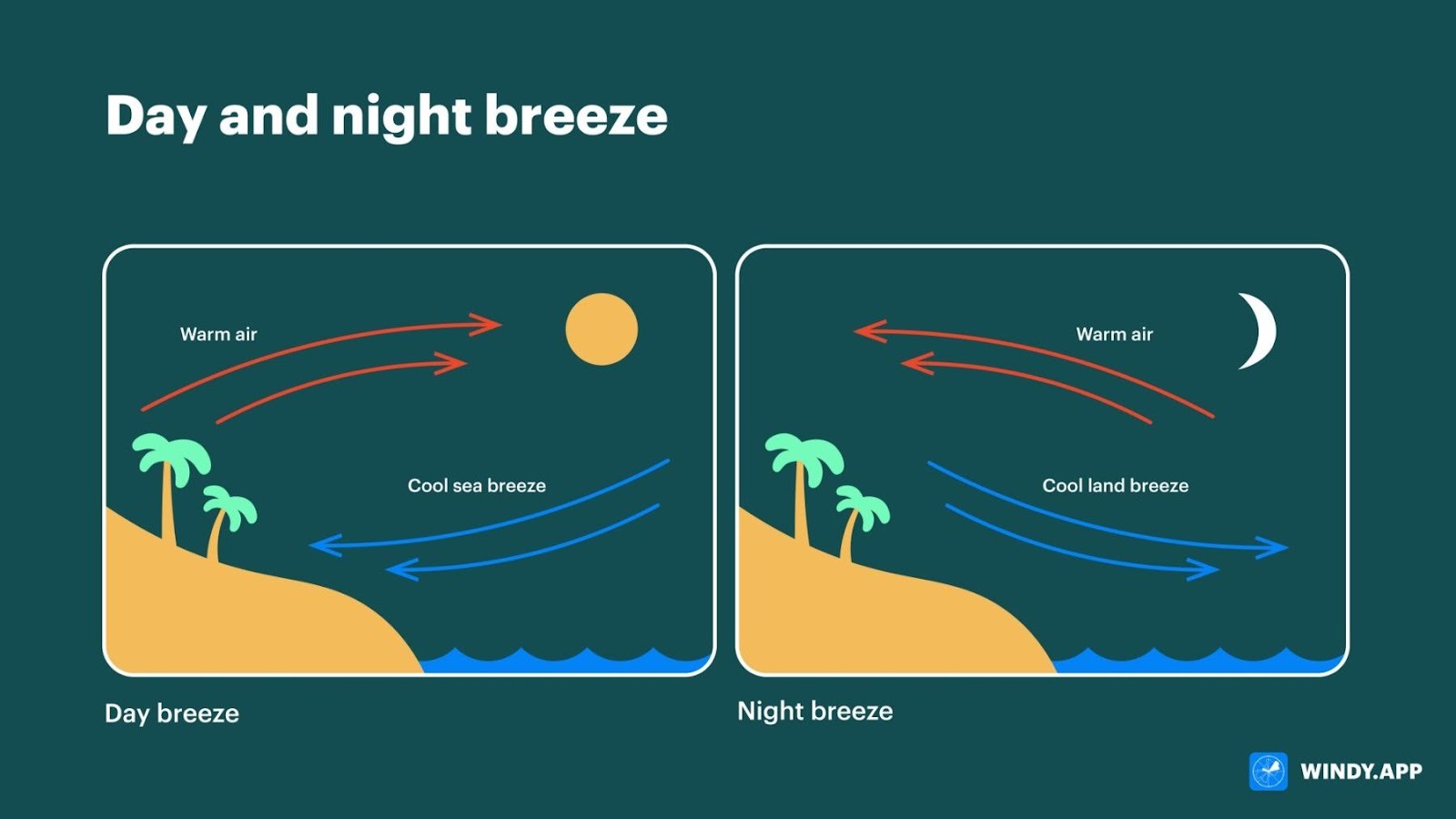
A building’s orientation isn’t just about rotating the building on its site. Architects employ long, narrow forms to encourage natural ventilation. They use courtyards to enhance stack effect cooling and use stepped massing to reduce wind pressure and glare.
Windows and other openings harness wind direction architecture beyond theory. Large openings are used on the shaded side while smaller, controlled openings are used on the heat-exposed side. High-level vents are used for air exhausts, while operable windows are aligned with wind flow.
A building’s orientation helps it reduce thermal load. The shading helps control what remains.
In the urban jungle, streets, building rows, and other open spaces have an influence on the sun and wind patterns. The right building orientation must align with the master planning strategies that are employed in the neighborhood.
A building’s orientation contributes first-hand to lower HVAC energy demand, reduced carbon emissions, long-term cost savings, improved air quality and occupant comfort. According to global building performance studies:
Buildings that have been designed with the right sun and wind orientation consume 30 to 50% less energy than poorly oriented buildings of the same size.
Workspaces that are daylight-optimized have shown a 10 to 25% increase in cognitive performance.
The orientation of a building in relation to the sun and wind is one of the most influential and powerful decisions that an architect can take. It becomes even more pertinent when it costs nothing to implement when compared to regular mechanical systems.
Architects must study and understand the nuances of sun orientation in architecture and wind orientation in architecture. They must also take into account local wind direction architecture to create buildings that naturally regulate light, heat and airflow.
Building orientation is becoming all the more pertinent and imperative as cities across the world are moving towards net-zero buildings, climate resilience and energy efficiency. All this, because it is no longer optional, but a fundamental requirement. This is true for single homes, commercial complexes or even large urban developments.
Request a Demo and try Digital Blue Foam to see how it helps you calculate the building orientation with AI.
The orientation of a house can be determined by analysing the site’s sun path, the wind direction, surrounding obstructions, and weather conditions of the region.
Pergolas should ideally face north or northeast. This ensures they receive soft daylight while avoiding harsh afternoon sun from the west.
In most regions of the Northern Hemisphere, buildings on the west and south sides receive the strongest sun exposure.
A sun path shows the movement of the sun across the sky throughout the day and year. It helps architects and designers place windows, shading devices, and building masses accurately.
The proper orientation depends on climatic and site conditions. It also depends on the function of the building. In most cases, north–south orientation with controlled east and west exposure is considered optimal.