AI-Powered Planning and Design, for Better Project Delivery and Urban Developments
GET STARTED



PRODUCTS
Industries
Industries
© 2024 DigitalBlueFoam

Municipal urban engineering transforms infrastructure investment by combining engineering, data, and long-term financial foresight. The blog explains how smart cities use AI, simulations, and sustainability metrics to guide capital decisions. It highlights global examples and shows how Digital Blue Foam enables faster, transparent, and future-ready planning for resilient, community-focused urban infrastructure.
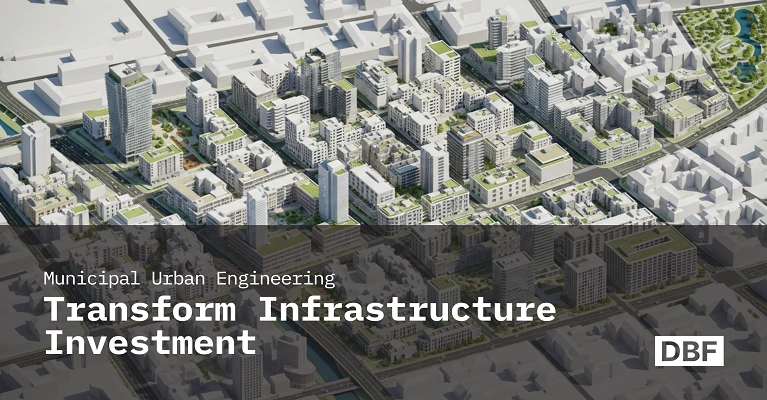
Cities today are operating under unprecedented pressure. Populations are expanding, climate risks are increasing, infrastructure is aging, budgets are constantly exploding, and demand is never easing. Municipal leaders are expected to build smarter, greener, and faster, all while having one eye on the future.
A confluence of this demand has brought municipal urban engineering to the forefront. What was earlier considered a technical domain is now a pertinent strategic decision-making discipline. A discipline that ensures cities no longer evaluate infrastructure solely on construction costs, but on numerous other facets.
This includes:
Municipal urban engineering is the layer of intelligence that transforms infrastructural investment into measurable equity. In an age dominated by technology, this intelligence is powered by geospatial data, AI, and simulation-driven planning tools.
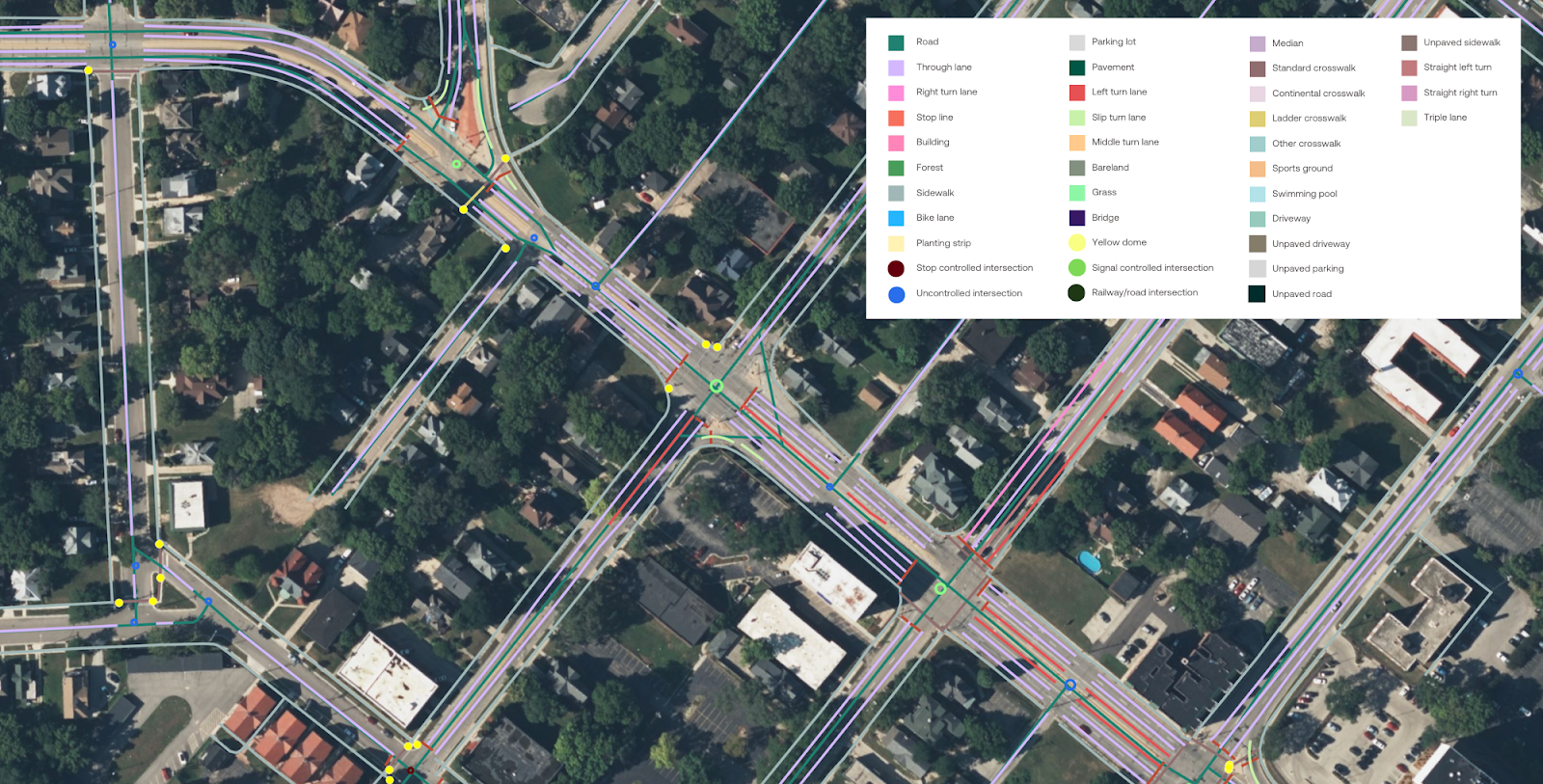
Municipal urban engineering takes care of the design, coordination, and optimization of important urban systems. This includes:
Today, municipal urban engineering transforms public infrastructure investment with engineering insight and data-driven urban planning decisions. It acts as the discipline that brings together engineering, planning and capital allocation. It's imperative nature helps municipal civil engineering systems answer the most pertinent questions:
Cities like Singapore, Helsinki, Dubai, and emerging hubs like Kigali are already implementing smart municipal urban engineering. These cities stand as a living example of collaborative planning between engineers, planners, and finance leaders. Where engineering meets data-driven foresight to create long-term infrastructural assets, not a recurring liability.
Municipal urban engineering, and by extension, sustainable municipal development, influence investment in numerous ways:
Rather than looking at minimizing upfront cost, cities are looking at minimizing total ownership cost. For instance, engineering decisions around traffic load forecasting, climate exposure, and performance of the drainage systems can reduce long-term maintenance spending by 15-30%.
Amsterdam is using predictive maintenance models to extend the bridge lifecycle instead of replacing it early, thereby saving millions.
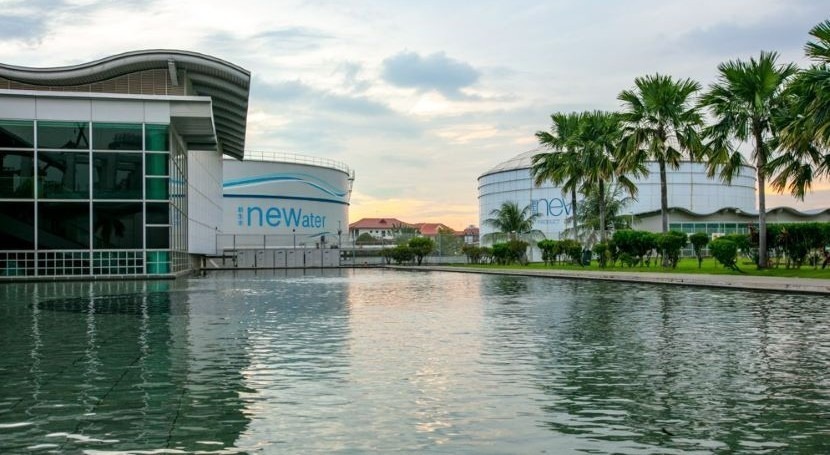
Singapore’s NEWater and networked smart metering system shows the world how engineering innovation can reduce long-term costs. The system uses engineering solutions to cut costs through:
Singapore’s system underlines how operational efficiency is an investment strategy, and not a maintenance goal.
Copenhagen uses cloudburst maps and natural drainage engineering to mitigate catastrophic flooding. This is a process of turning resilience planning into financial protection and efficiency.
Dubai employs a unified digital infrastructure blueprint that ensures 5G, IoT deployment and other technologies align with economic clusters. This greatly reduces expensive retrofit cycles.
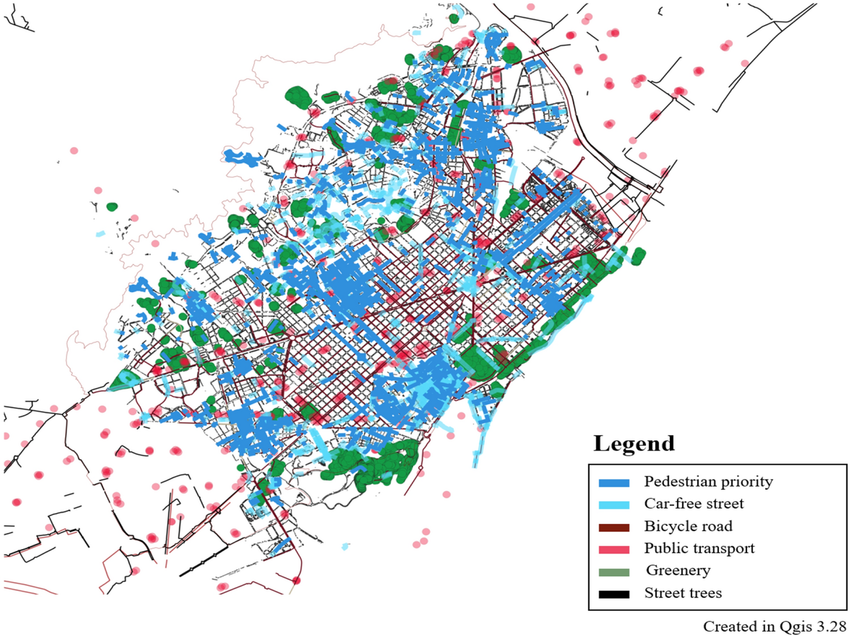
Barcelona’s superblock model puts people and community needs over those of vehicles. This reduces road expansion needs, lowers emissions-based penalties, and increases land value.
Cities across the world still face structural obstacles. These come in the form of:
Municipal leaders and urban planners understand that traditional tools and siloed analysis cannot support modern decision-making.
This is pushing cities to employ AI-backed design for infrastructure, simulation modelling, and to take ROI-focused, data-rich decisions.
Here are five technological solutions that are bringing a change in the way public infrastructure investment is carried out:
Instead of being limited to a single design or a small number of designs, municipal authorities can now create or generate hundreds of alternative layouts. With DBF, this can be done instantly, and these designs are also optimized, keeping in mind cost, accessibility, climate resilience, land use integration and numerous other factors. This process reduces assumptions and helps with feasibility studies.
Multiple global cities, including New York, Singapore, and Helsinki, are using digital twins to understand future-ready infrastructure. This is being done by:
With this, cities can check infrastructure models and their plausible outcomes before investing in their implementation.
Municipal engineers must make decisions that balance budget, emissions, social equity, climate vulnerability, and land efficiency, among numerous other aspects.
Technology helps urban planners and municipal engineers to prioritize competing goals transparently.
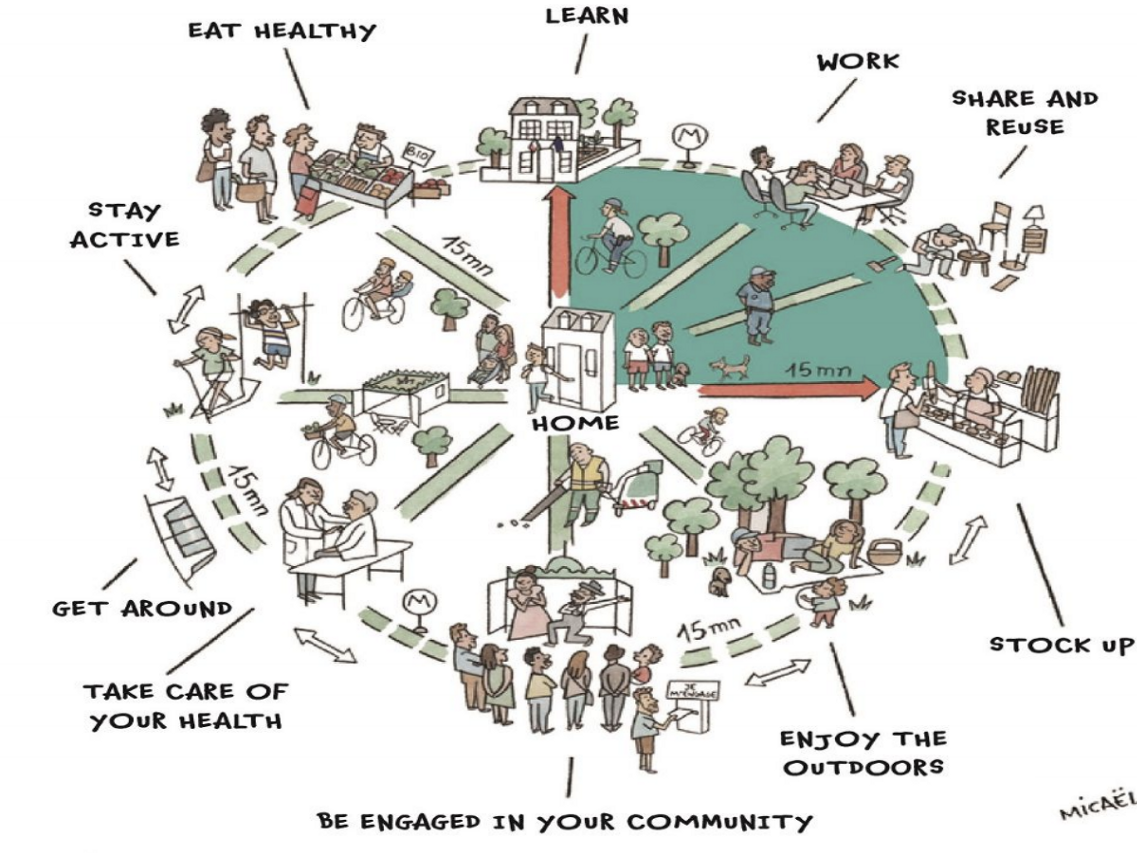
Instead of expanding outward, cities are doubling down on investments in proximity-based access.
Paris, Melbourne, and Bogotá illustrate how compact layout planning:
Data-driven urban planning provides the measured framework behind these decisions.
Smart cities aren’t just embracing new tools. They are transforming how stakeholders work together.
Shared data = faster alignment = smarter investment.
DBF brings forth a whole new level of decision intelligence to municipal engineering. Decision intelligence refers to the use of data and technology to enable better choices. DBF achieves this by merging generative design, environmental analytics, urban data, and financial modelling in one unified platform. Rather than working on various tools, urban planners and engineers can now evaluate all technical, social, environmental, and economic aspects and their implications in real time.
Here's how DBF is doing it for multiple municipal corporations:
A regular feasibility study can take months, or maybe more. DBF changes this by using AI-driven generative design to create numerous possible configurations instantly. These different configurations take into account the street layout, block structures, open space ratios, utility routing, density and zoning combinations, along with other aspects.
DBF also optimizes each configuration with different investment goals. The goal could be to reduce CapEx, improve resilience, enhance access, or improve sustainability scores.
Why it matters for municipal authorities:
With DBF, municipal leaders and authorities can rapidly compare, refine, and validate multiple planning and investment options within a single workflow. This significantly reduces planning cycles by 30 to 50 percent and cuts down redesign and iteration costs.
DBF enables early visibility into technical, environmental, financial, and social outcomes. This allows authorities to make capital decisions that are faster, more accountable, and defensible, while aligning investments with regulatory requirements, funding conditions, and long-term city objectives.
By using DBF’s built-in sustainability evaluation and ROI simulation, municipal authorities gain a clear understanding of how engineering and urban design choices will perform over time. This includes CapEx, OpEx, revenue potential, operational efficiency, and long-term budget impact, helping prioritize projects that deliver the highest public value.
DBF’s BIM synchronization reduces rework and documentation delays, which accelerates permitting, funding cycles, and early-stage approvals. At the same time, DBF’s CITYPULSE insights shift decision-making from being purely engineering-driven to people-centric, ensuring infrastructure upgrades deliver measurable improvements in liveability, accessibility, and daily urban experience while remaining cost-effective.
Why it's important for local government:
Through this, DBF helps planners identify hindrances and risk factors early. With all the information available in one location, planners and authorities can use the funds appropriately and more transparently.
Every city today has the responsibility to meet different sustainability goals. This includes the ESG reporting requirements, net-zero mandates, and climate adaptation goals. DBF makes sure that cities can carry out sustainability assessment, right at the beginning, not after finalization of design.
This is done by evaluating various factors like carbon impact, daylight availability, walkability and liveability metrics, among others.
Municipal urban engineering has evolved. It is now a strategic investment discipline that is shaped by data, simulation, and cross-sector collaboration. With all cities navigating population pressure, climate uncertainty, and regulatory shifts, the convenience of finding out and testing various aspects before committing resources has become essential.
Tools like Digital Blue Foam support this. They help cities make infrastructure decisions that are community-focused, future-ready, and smart.
If you are an urban planner or administrator exploring how to optimize infrastructure investment or improve planning workflows, DBF can aid in the transformation. Just fill the form, and DBF’s specialized product workforce will reach out.
Municipal urban engineering ensures every decision consolidates financial performance, sustainability compliance, and long-term asset efficiency. This complete overview of different factors helps with data-driven urban planning and investment decisions.
Simulations and digital twins can help forecast long-term outcomes and reduce the risk of financial loss before any construction begins. By removing all necessary risks during the conceptual stage, the construction is made future-proof.
DBF effectively brings together generative design, ROI modelling, sustainability metrics, and GIS in one platform. This ensures AI-powered generative design for city-scale systems while giving out real-time ROI simulation for infrastructure investments.
15-minute cities have become a pivotal sustainability validation for municipal projects. This is mainly due to their ability to reduce infrastructure strain and increase economic and social efficiency through proximity-based access.