AI-Powered Planning and Design, for Better Project Delivery and Urban Developments
GET STARTED



PRODUCTS
Industries
Industries
© 2024 DigitalBlueFoam

Digital twins are transforming warehouse design by enabling planners to simulate layouts, automation, and energy performance before construction. This guide explains key benefits and a step-by-step implementation process, helping stakeholders optimize space, reduce risks, improve efficiency, and build future-ready logistics facilities using data-driven virtual models.
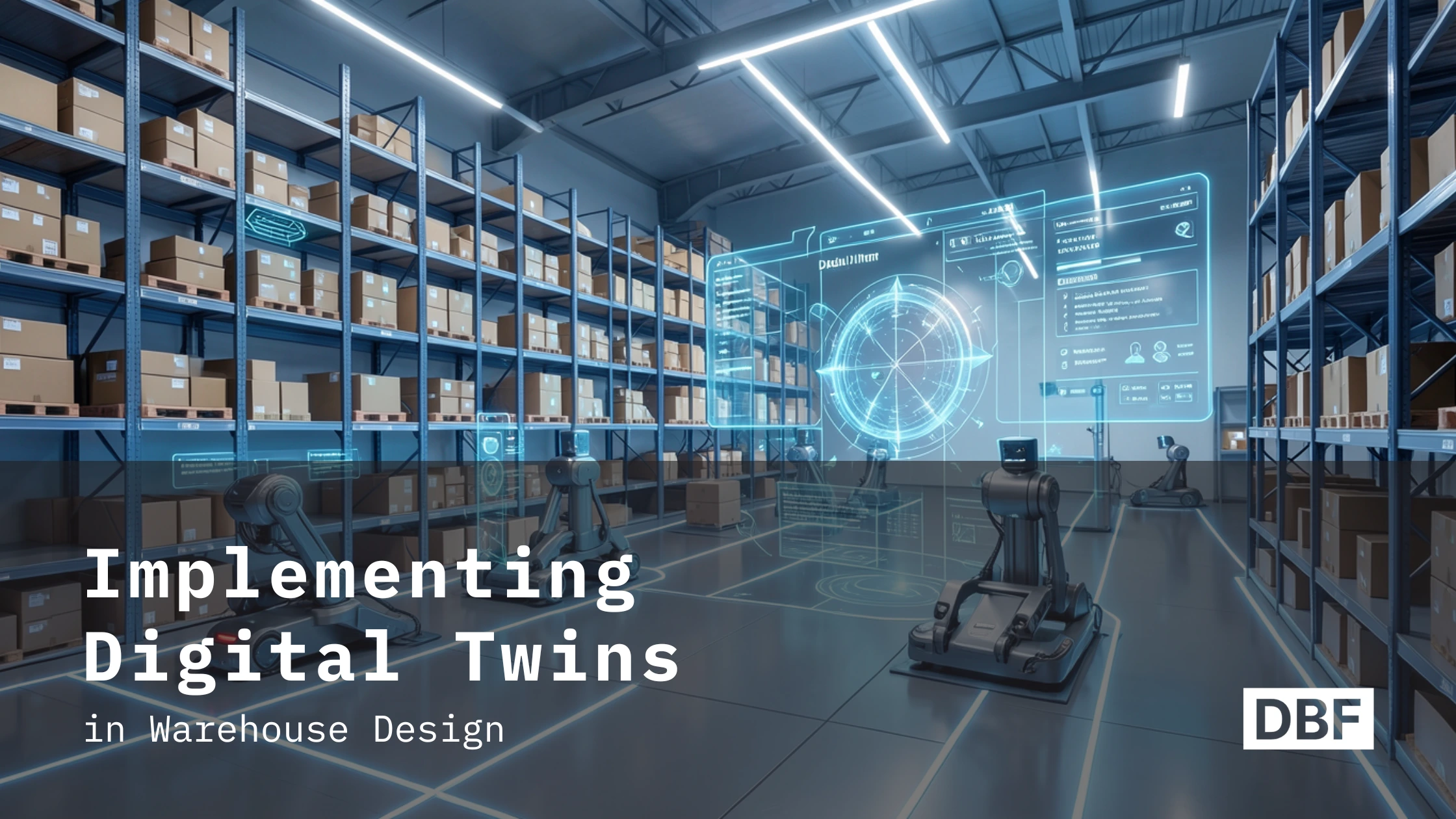
Warehouse design today is not just about static planning with floor allocation and rack placement. It is much more. Modern logistics facilities must address variable demand, urban logistical limits, automation, and ambitious energy and sustainability goals.
This puts the onus on planners and technical stakeholders to design a facility that is not just efficient in the short term, but also is adaptable in the long term.
A digital twin warehouse empowers planners and stakeholders with the technical infrastructure needed for this transformation. A digital twin warehouse is a virtual, data-connected replica of warehouse systems, enabling planners and stakeholders to simulate operations, validate layouts, and maximize performance before construction.
This guide explains what a digital twin warehouse is, its benefits, and highlights a plain step-by-step plan for putting one in place.
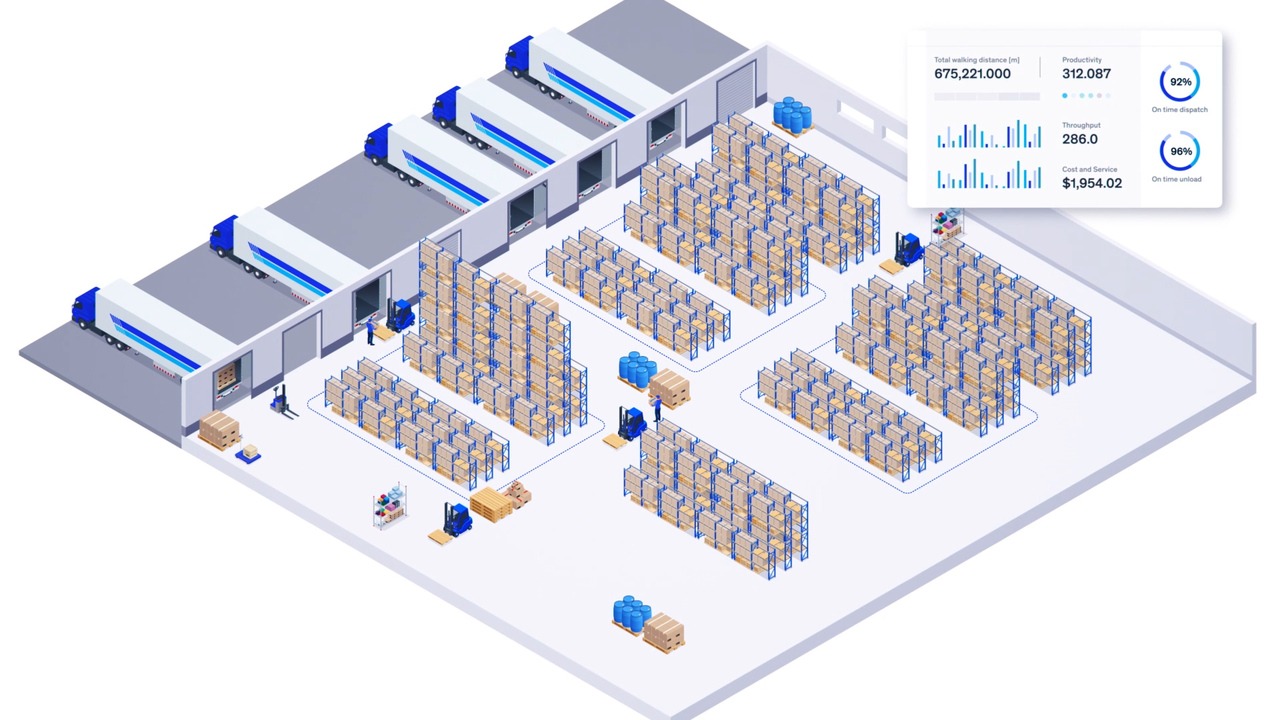
Digital twins allow planners to examine spaces in detail. They can analyze specific inventory and order projections to understand the widths of aisles, racking, buffer zones, and staging. With the help of simulation and storage flows, barriers and inefficiencies in the layout can be identified early.
Outcome: When planners optimize space usage and storage flow, they can extract higher efficiency per square foot with fewer post-construction modifications.
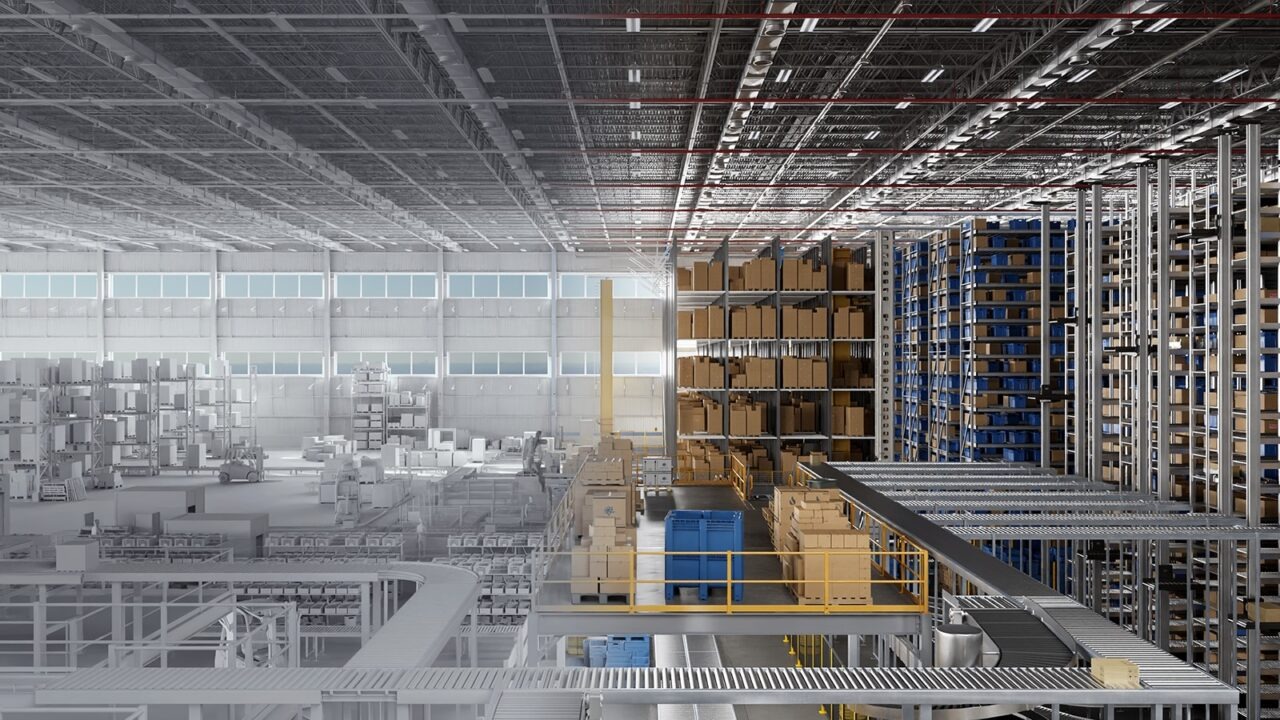
Modern warehousing demands automation readiness. Digital twin helps planners and architects to test different aspects like AGV/AMR routes, conveyor paths, robotic picking zones, and equipment placement, all with the real-time geometry of the facility.
Outcome: Through real-time visualizations, planners can reduce the risk of spatial conflicts and help in the smoother integration of automation systems.
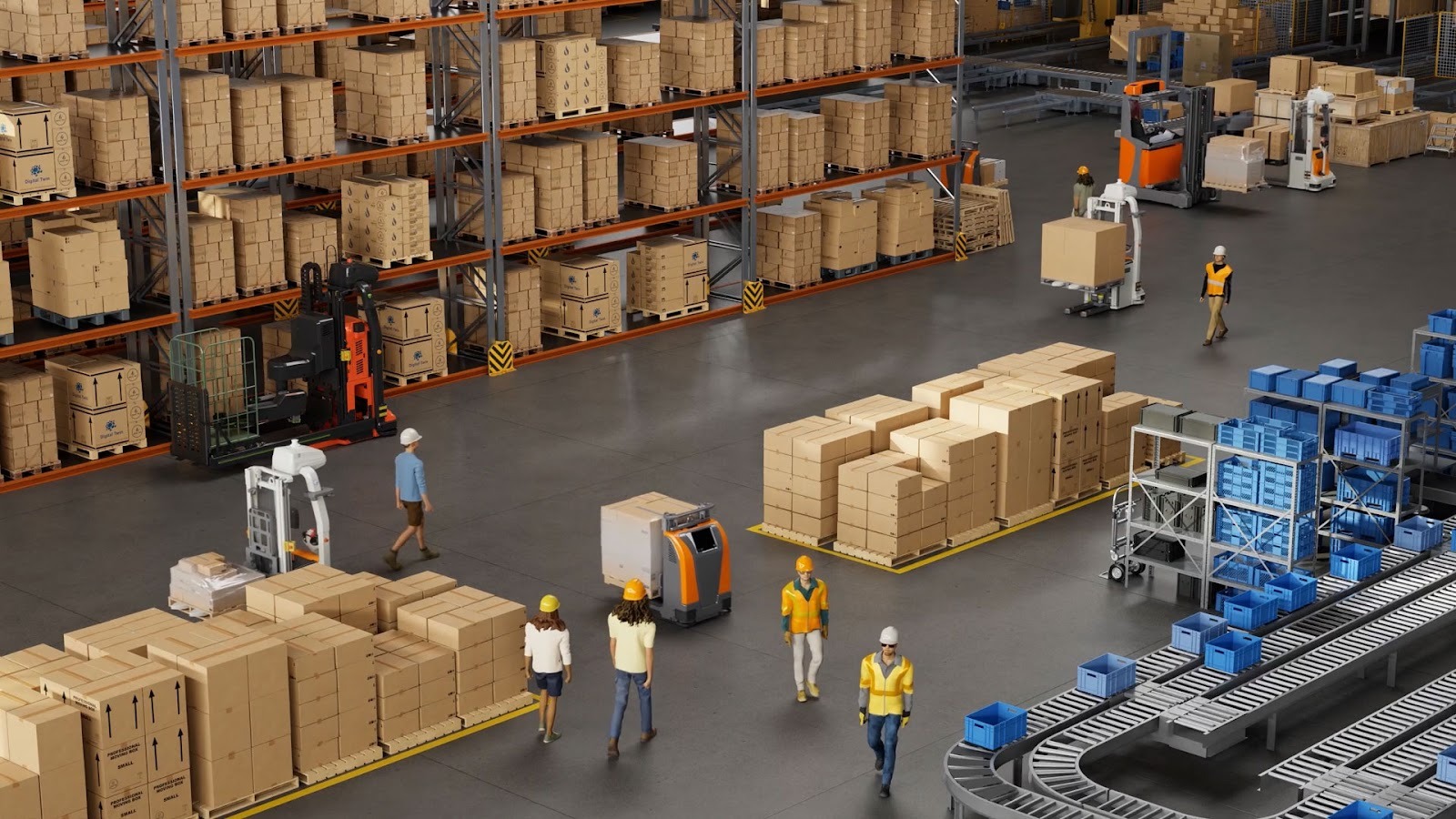
Design changes are expensive to carry out, especially once the design is locked in. This is exacerbated further during the construction phase. A digital twin helps teams evaluate multiple scenarios, whether to choose between cross-docking or storage-heavy models, single-deck against mezzanine configurations, or alternative dock arrangements, all without any physical disruptions.
Outcome: With fewer redesign cycles, planners and stakeholders can execute more robust design decisions.
Using digital twins, environmental performance can be evaluated using the model. This can help planners and stakeholders understand energy distribution and loads, helping them determine energy consumption across various scenarios.
Outcome: Early-stage mitigation of energy and sustainability-related constraints in logistics facilities can be achieved with more energy-efficient designs.
Digital twins are not a single tool to be deployed. It is a part of a more structured and much larger planning system. One that has an extensive technical framework, which is designed specifically for planners, architects, and engineers. Here are the steps that would go into the implementation of a digital twin in warehouse design:
As a first step, planners collect and merge all the relevant datasets. This comprises operational, environmental, and spatial dimensions. They assess site boundaries, building footprints, equipment specifications, movement of goods, ventilation, thermal zones, sustainability targets, and much more. By assessing this data, they can create a digital model that truly reflects the real-world design of a warehouse they intend to construct.
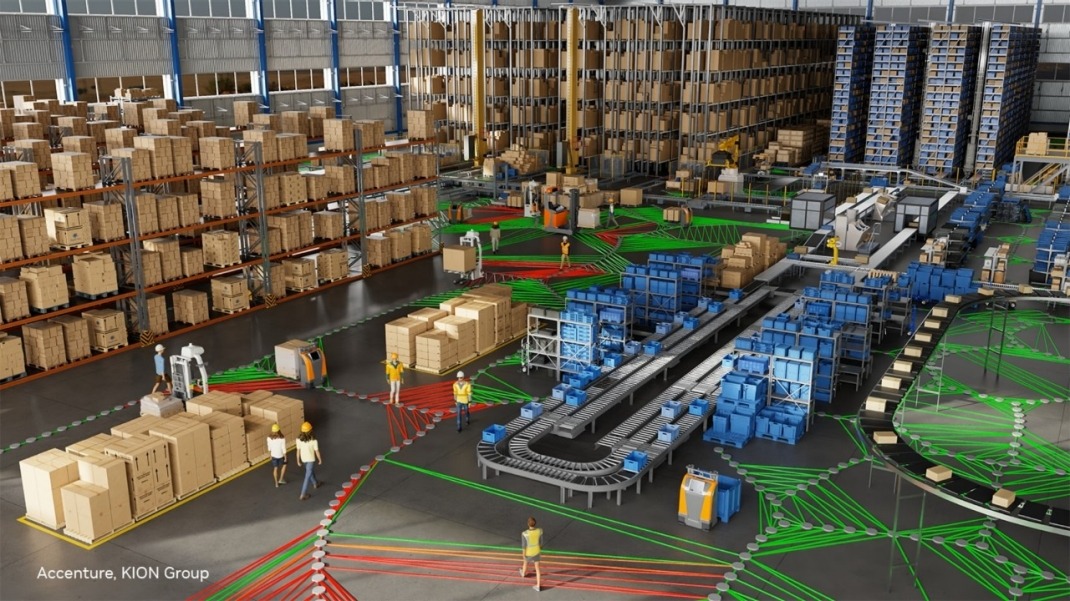
With the information that is collected, planners use a 3D modeling tool to create a layout of the warehouse. This tool creates a base outline that has all the necessary aspects and components. Here’s where applications like Digital Blue Foam can assist planners in adding specific restrictions and site limitations directly onto the tool. This helps in creating site models that can be used to carry out performance simulations.
To help transform a 3D model into a digital twin of a warehouse, planners must be able to interconnect different operational inputs within the model. These inputs include sensor and IoT data, output assumptions, order profiles, labor movement, and other safety constraints. With this information, planners will be able to utilize real-time data to carry out predictive analysis for warehouse planning.
With the help of digital twins, planners can run simulations that replicate the daily operations. From how materials are handled within the facility to the flow of inventories to human factors like congestion zones and worker travel paths, everything can be simulated. These simulations define the flow, helping planners highlight bottlenecks that may not have been depicted in the drawings.
Planners can use the simulations to gather data that can help determine the operational and environmental performance. It helps with safety compliance and equipment utilization, ensuring the warehouse is efficient, safe, and sustainable.
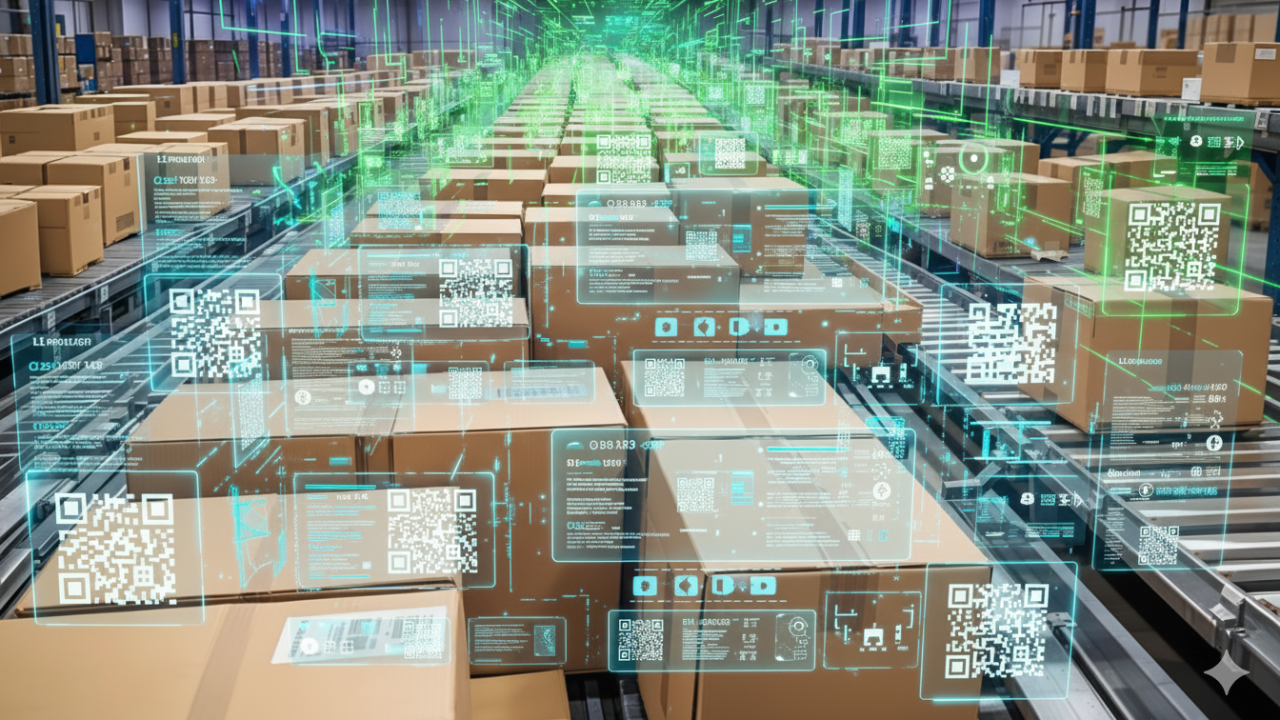
In the last step, planners use all the simulation data to refine the design. This could include redesigning layouts to minimize travel times and distances, relocating docks to enhance vehicular paths, modifying automation paths to reduce conflicts, or restructuring the balance of ventilation and lighting to optimize energy loads and efficiency.
Digital Blue Foam (DBF) facilitates the digital twin workflows in the planning of warehouses and industrial infrastructures by providing modeling, simulation, and collaborative frameworks.
DBF helps planners define site boundaries, building envelopes, and zoning constraints. All of this ensures the model is aligned with regulatory and spatial conditions.
DBF helps teams test multiple spatial configurations, comparing aisle widths, rack heights, staging zones, and dock layouts, among other aspects. This helps them evaluate capacity, safety, and throughput.
DBF also has integrated environmental layers that enable energy and comfort analysis. This can be done while modeling congestion points and operational frictions.
DBF’s shared environment supports cross-disciplinary reviews. This helps architects, logistics managers, and automation engineers to test and validate different equipment strategies within a single digital model. With this, planners can optimize warehouse layout for performance while maintaining stakeholder alignment.
Global logistics operators use digital twins to validate different parameters like high-density racking, robotic picking, and conveyor systems before construction. This reduces commissioning time and improves early-stage productivity.
In densely populated cities, digital twins help planners evaluate vertical storage, multi-level circulation, and energy-efficient building services, while optimizing throughput.
Digital twins help manufacturers get a clear idea of numerous aspects, like the movement of raw materials, how finished goods are dispatched, and other internal movements. This helps with predictive maintenance and optimization.
The new generation of warehouses is expected to be adaptable, ready for automation, and efficient with their energy performance. going to be defined by adaptability, automation readiness, and energy performance. Designing these facilities with older, traditional methods puts them at risk of having expensive redesigns, operational inefficiencies, and future changes.
By using a digital twin for warehouse design, planners can simulate, validate, and optimize every aspect of a facility before construction. helps in creating logistics infrastructure that is both technically robust and strategically future-proof.
Platforms like Digital Blue Foam (DBF) accelerate this transformation by providing an integrated environment for modeling, simulation, and cross-disciplinary collaboration. With DBF, planners can test scenarios faster, align stakeholders more effectively, and deliver warehouse designs that are technically robust, scalable, and ready for the demands of modern logistics.
A digital twin is a digital replica of the warehouse that showcases the layout, the flow of inventory, and its performance under different stresses. A data-backed virtual model, a digital twin, enables simulation, monitoring, and optimization throughout the design process.
A digital twin simulates operations before the construction begins. It identifies inefficiencies, congestion points, energy waste, and other conflicts, helping planners to focus on performance-based design.
Yes, digital twins help planners test various systems. This includes the conveyor systems, AGVs, robotic picking zones, and equipment placement, ensuring smooth automation integration within the system.
DBF helps with 3D modeling, flow simulation, environmental analysis, and collaborative review tools. Additionally, it helps planners design, test, and optimize different layouts using digital twins.