AI-Powered Planning and Design, for Better Project Delivery and Urban Developments
GET STARTED



PRODUCTS
Industries
Industries
© 2024 DigitalBlueFoam

Efficient urban planned cities rely on coordinated land use, multimodal transport, energy responsiveness, and data-driven governance. This guide outlines global best practices and sustainability strategies for planning directors. Learn how Digital Blue Foam (DBF) supports real-time scenario testing, stakeholder alignment, and performance-driven planning for resilient, future-ready cities.

Today, planning directors must deliver higher urban performance using fewer resources. They are tasked with finding more efficient mobility solutions, better housing, greater resilience, and improved climate outcomes. All of this with fixed budgets and strict regulations. Efficiency is now the main performance metric for these projects, not a secondary expectation.
Efficiency in urban planning results from system-level coordination among transport, energy, public space, governance, and land use, not just density or sustainability features. Urban planning directors can apply lessons from global cities and targeted sustainability strategies to achieve these outcomes.
Efficiency in urban planning is often misunderstood. It is often attributed to compactness or speed of development, but in practice, efficient urban planned cities are those that optimize resource use across time, and not just space.
Here are four technical characteristics that consistently define efficient cities:
Most efficient cities worldwide achieve floor area ratios (FARs) and population densities only where the infrastructure capacity supports them. This requires aligning different zoning envelopes with transit capacity, utility throughput, and service catchments rather than applying the standard uniform density controls.
Transport efficiency is not measured by vehicle throughput but by person-throughput per unit of infrastructure. Efficient urban systems prioritize walking, cycling, and mass transit. This is not done just through network design, but is done through policy intent.
Instead of treating sustainability as a building-level attribute, efficient urban systems plan for larger-scale district-level energy systems, climate-adaptive public spaces, and passive urban forms.
Planning efficiency is as much about space as it is about institutional. Cities that perform well have fewer approval cycles, clearer rules, scenario testing, and shared data environments.
These different attributes are not just theoretical. They are evident and observable across the best urban planned cities across the world.
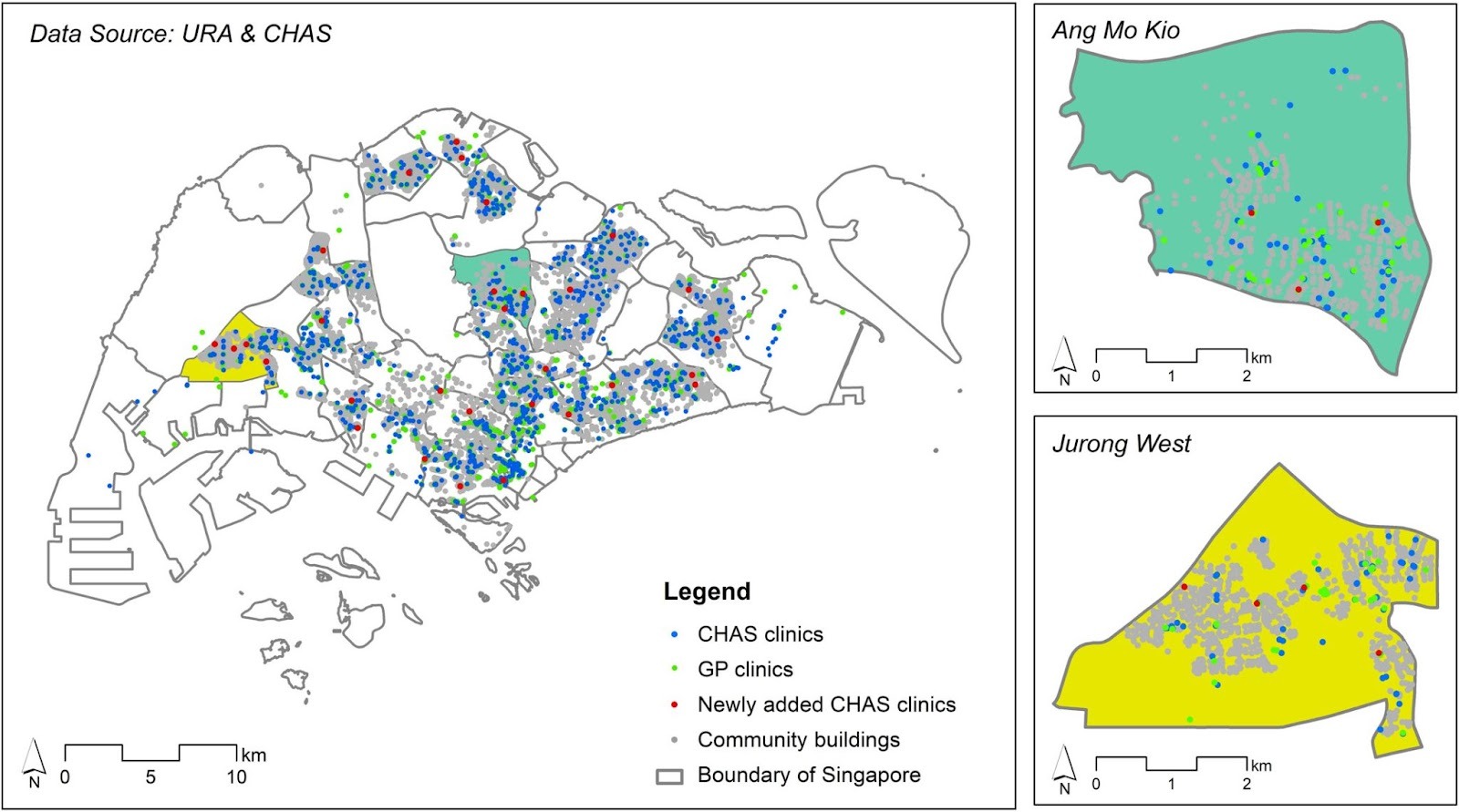
Singapore’s efficiency is defined by how vertically it has integrated land-use planning, transport investment, and housing delivery. The city has deliberately concentrated all its high-density development along different transit corridors, along with public housing, employment centres, and different amenities.
Copenhagen’s urban efficiency is powered by its bike-first mobile hierarchy. It is supported by compact block structures and district-level energy systems. Copenhagen has seen lowered road maintenance costs along with healthcare expenditure, all thanks to active mobility, which contributes to long-term municipal savings.
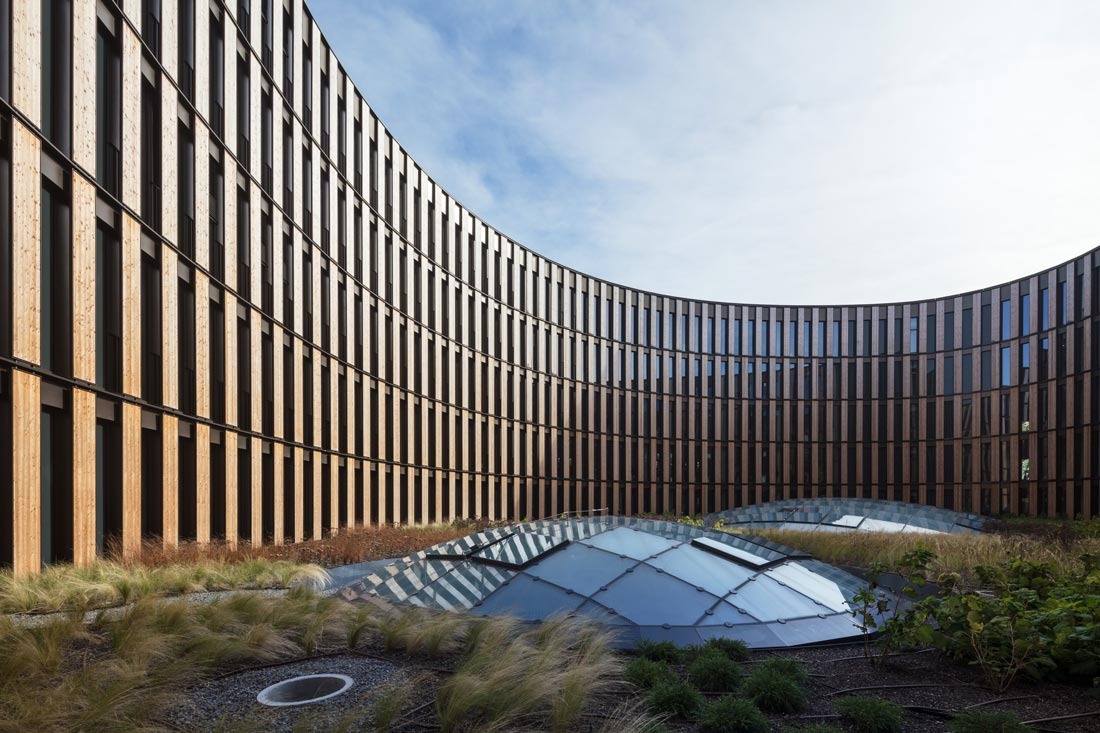
Freiburg has integrated solar access, building orientation, and energy planning directly into zoning and development controls. This resulted in an urban form that supports passive energy gain without compromising on density. Sustainability metrics improve when sun, wind, and energy access are treated within the planning lifecycle, and not post-design optimizations.
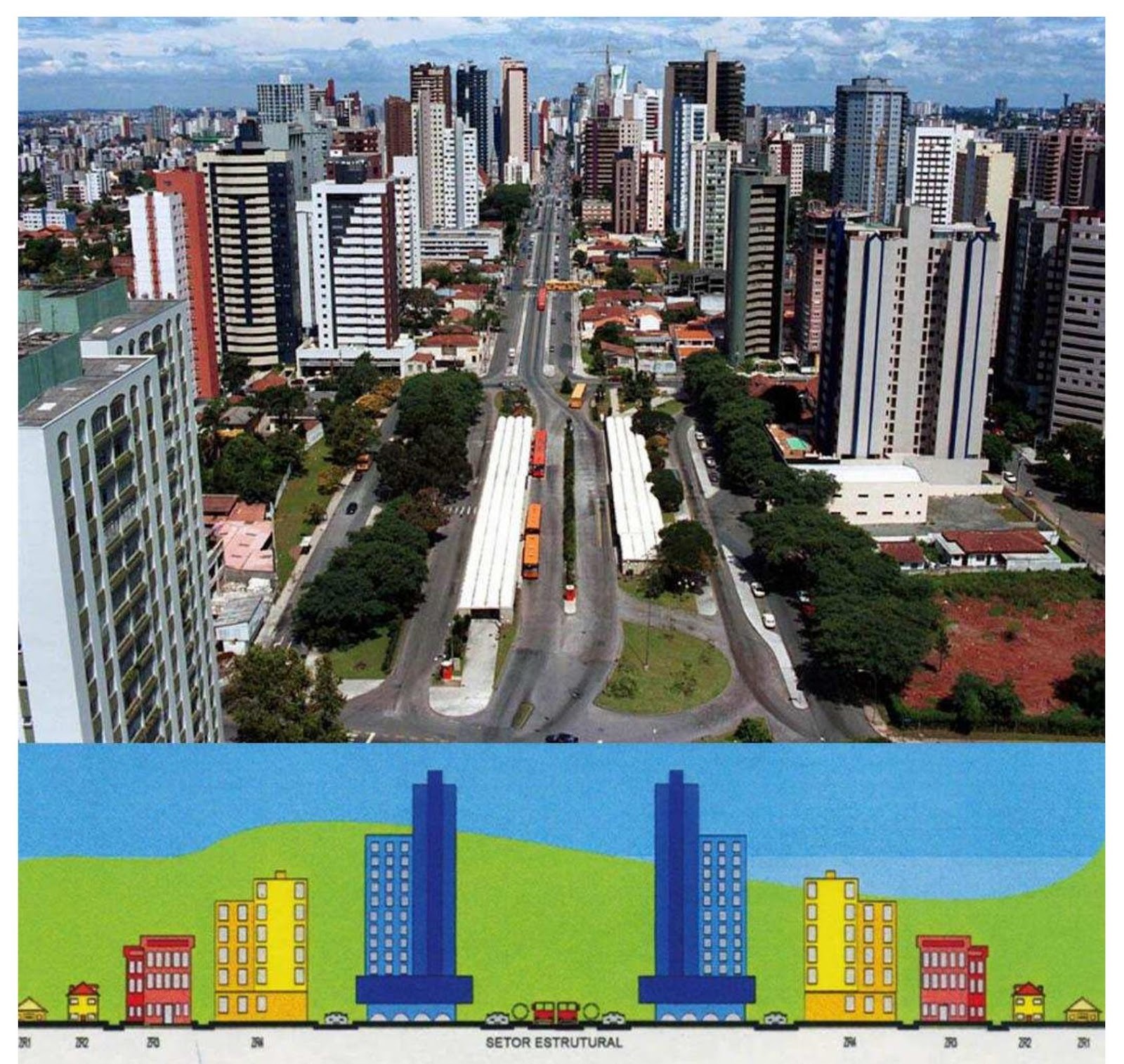
Curitiba’s Bus Rapid Transit (BRT) system is not an afterthought or an add-on. It forms the structural spine of the city around which different services, land use, and population density are organized. The city exemplifies how efficiency-driven urban planning models can succeed even with cost constraints, where mobility isn’t prioritized early.
Barcelona’s Superblock model is a textbook model on how efficiency can be brought forth by reclaiming roads for public use, lowering vehicular dominance without compromising accessibility.

The model demonstrates how reprogramming existing urban infrastructure rather than expanding it can work for mature cities across the globe.
Cities that are planned efficiently are not accidental. They are a result of calculated strategies and plans that planning directors employ across different contexts.
TOD is most effective when it is implemented as a system and not as a zoning overlay. This includes calibrated density gradients, pedestrian-first areas, and direct integration with affordable housing and parking overlays. TOD should aim to reduce both household transportation costs and infrastructure duplication.
Single-use zoning has a proportional increase in travel demand and infrastructure redundancy. Cities with efficient urban planning adopt mixed-use zoning that helps them meet daily needs within short distances. This improves land-use efficiency, walkability metrics, energy performance, and much more.
Green infrastructure should not be looked at as decorative elements, but as performative systems. This includes storm water retention corridors, urban heat mitigation through canopy planning, and multi-functional open spaces, among other things. These systems reduce long-term capital expenditure while improving resilience.
Strict and rigid regulations often underscore efficiency. Cities with adaptable urban infrastructure implement zoning based on performance and density-linked sustainability incentives, among other things. These tools help provide clarity and flexibility, which is critical for scalable planning outcomes.
Cities that employ efficiency-driven planning also have the ability to test trade-offs. This evaluates density against livability, energy performance against built form, transport access against land value, and other aspects. Plans that do not employ static plans cannot support this complexity.
Digital Blue Foam (DBF) acts as an intermediary solution that helps as a scenario-testing and decision-support platform for urban planning directors and design teams.
DBF can help build better and more efficient urban planned cities by:
Instead of relying on abstract standards, planners can see their decisions and their impact in real time. This includes impact on sunlight access, energy demand, among others.
DBF helps compare alternative layouts. The solution can enable comparison across different block sizes, street networks, and land-use mixes. This helps planners identify the most efficient configuration that can be employed.
When everyone, from policymakers to planners and architects, works together on the same data-rich model. Iterations and approval cycles are reduced. DBF helps build replicable frameworks for efficient cities, not just one-off master plans.
Planning directors examine metrics that define efficiency. These metrics include land-use intensity versus infrastructure capacity, modal split and trip length reduction, energy use per capita, public space per resident, and approval cycle duration, among other metrics. Cities that can consistently track and model these indicators can help outperform those that rely solely on prescriptive guidelines.
Efficient urban planning is no longer optional. It is the foundation of resilient, financially viable, and climate-responsive cities. Planning directors who continue to rely on static masterplans and fragmented workflows risk delivering urban systems that are costly to maintain and difficult to adapt over time.
The future belongs to cities designed through measurable performance, integrated systems thinking, and continuous scenario testing. By embedding efficiency metrics into everyday planning decisions, directors can deliver urban environments that scale gracefully with growth, climate pressures, and evolving mobility demands.
Digital Blue Foam (DBF) empowers this shift by giving planning teams a real-time, data-rich environment to visualize trade-offs, test alternative layouts, and align stakeholders around evidence-based decisions. With DBF, efficiency becomes a quantifiable planning outcome by enabling directors to move faster, reduce uncertainty, and build urban systems that are truly future-ready.
A city that has employed efficient city planning strategies optimizes various aspects effectively. This includes land use, infrastructure capacity, mobility systems, and governance processes.
Planning directors who are in charge of designing efficient urban systems must prioritize transit-oriented development, mixed-use zoning, green infrastructure systems, and performance-based regulations.
Efficient urban planning improves liveability by reducing travel demand, energy use, and infrastructure redundancy, all while improving environmental performance.
DBF helps urban planners and architects with real-time simulation of various aspects. This includes the likes of energy demand, transport, density, and different policy scenarios, all while supporting more demanding planning decisions.